Insurance adjuster invoice review for restoration contractors: what adjusters check, how to document charges and supplements, and how to get paid faster.

Insurance adjusters are a familiar part of insurance-related restoration work. They evaluate the property damage behind a claim and review the information available to determine what the insurance company may cover.
Insurance adjuster invoice review often involves raising questions, especially since the adjuster wasn't there for every part of the job and has to rely on the invoice and supporting documentation for context.
In this article, you'll learn what an adjuster looks at when reviewing a restoration invoice, how to prepare your documentation before you submit, and what your team can do when the adjuster has questions about the work or charges.
KEY TAKEAWAYS
An insurance adjuster evaluates property damage as part of the insurance claims process.
According to the National Association of Insurance Commissioners (NAIC), an adjuster determines the amount of damage, reviews the insurance policy for applicable coverage and limits, and estimates the repair or replacement cost value associated with the damage.
Their role can also involve reviewing the information connected to the loss. Depending on the claim, this may include inspecting the property and looking at estimates, invoices, photos, or other documentation that helps them understand the damage and related costs.
This is how the restoration contractor becomes part of the process. Your company performs the restoration work and bills for the services provided, while the adjuster evaluates the loss on behalf of the insurance carrier.
If the adjuster needs more information about an estimate or charge, they may also contact the contractor for clarification.
Keeping those roles separate helps explain what happens when you submit a final invoice. The adjuster isn't simply receiving a bill and approving the total. They're reviewing the invoice in the context of the claim and the information available to them.
So, how do adjusters review contractor invoices, and what are they actually looking for?
| 1 | Scope of work and services performed |
| 2 | Labor, materials, and equipment charges |
| 3 | Supporting job documentation |
| 4 | Insurance claim and property information |
The scope tells the reviewer what the restoration company actually did.
For example, a water damage job could involve water extraction, removal of affected materials, structural drying, or other work based on conditions at the property. The invoice should make it possible to understand which services the contractor completed.
However, the final scope may still differ from the original estimate as the restoration job progresses. A crew could uncover hidden damage during the job or find that the water intrusion affected more of the property than initially expected.
If that leads to additional work, the adjuster needs to understand why those services now appear on the final invoice and are being submitted for reimbursement. Job photos, moisture readings, or other relevant records can help explain what the crew found and why the scope changed.
The adjuster also reviews how the contractor arrived at the amount billed.
This is especially relevant when labor hours, material quantities, or equipment duration affect the final cost. If drying equipment stayed on site longer than originally estimated, for example, the invoice needs a detailed explanation of the equipment used and the duration being billed.
Vague line items make these charges harder to evaluate. Descriptions that identify the work performed or equipment used give the adjuster a clearer basis for reviewing the amount and give your team something specific to address if a charge is questioned.
Since the invoice shows what your company charged, records and documentation support what happened on the job that led to those charges.
This is particularly relevant when the final scope changed after work began or a charge depends on conditions discovered at the property. Photos, moisture readings, and equipment records can help document those conditions and connect them with the work listed on the invoice.
J.D. Power's 2026 U.S. Property Claims Satisfaction Study found that 49% of customers used digital tools to submit photos that were used to estimate or pay their property claim. This shows how essential visual documentation is when evaluating a property claim.
That's why having these records organized and easy to access also makes it easier for your team to respond when an adjuster asks for more information about a specific service or charge.
Before the adjuster can review the charges themselves, they need to connect the invoice to the correct claim.
Details such as the claim number, property address, client information, and relevant job dates should match the information already associated with that loss.
This allows the adjuster to review the invoice alongside the estimates, photos, reports, and previous correspondence for the same claim.
If those details don't match, the adjuster must resolve the discrepancy before they can properly review the invoice.
Once the invoice is tied to the correct claim, the review can focus on the more substantive questions around the work performed and the amount being billed. For how the billing side works when you submit directly to the carrier, see our guide to direct insurance billing in restoration.
Not every adjuster works the same way, and the type of adjuster on the file changes how your invoice gets reviewed. Knowing the difference between a public adjuster vs insurance adjuster, for example, tells you whose side each person is on and who can approve a charge.
| Adjuster type | Who they work for | What it means for your invoice |
|---|---|---|
| Staff (company) adjuster | Employed directly by the insurance carrier | Reviews the invoice against the carrier's estimate and guidelines. Often handles many claims at once, so clear line items save time. |
| Independent adjuster | A firm or contractor hired by the carrier, common after large storms | Applies the carrier's rules but may need to send questions back to the carrier before approving a charge, which can add a step. |
| Public adjuster | Hired by the policyholder, usually for a fee | Advocates for the property owner and may use your documentation to support the claim. Licensing and fee rules vary by state. |
| Desk adjuster | Carrier staff who review files remotely | Usually does not visit the property, so photos, moisture maps and drying logs carry the whole story. |
Whoever is on the file, the same rule applies: the invoice and the records behind it have to make sense to someone who was not on site. Ask early who the adjuster is, whether they are staff or independent, and how they prefer to receive documentation. That one conversation can save a week of back and forth later.
Most adjuster questions can be answered before they are asked. Run through this checklist before any final invoice goes to the carrier, whether it is a mitigation invoice or the rebuild.
| 1 | Match the claim details Claim number, policyholder name, property address, date of loss and job dates should match what the carrier already has on file. |
| 2 | Use estimating-platform line items If the carrier works in Xactimate or a similar platform, write the final invoice in the same line-item language so the adjuster can compare it to the estimate item by item. |
| 3 | Attach moisture mapping and drying logs Daily moisture readings, a moisture map of affected areas, and equipment placement records justify drying days and equipment charges. |
| 4 | Include dated photos Before, during and after photos tied to rooms or line items show the damage the crew found and the work completed. |
| 5 | Explain every scope change If hidden damage expanded the job, note when it was found, who was told, and which line items it added. This is the basis for any supplement. |
| 6 | Add signed paperwork Work authorization, any direction to pay or assignment documents your state allows, and a certificate of completion signed by the owner. |
| 7 | Show the customer portion separately List the deductible and any non-covered work the owner approved, so the adjuster sees only what the carrier is being asked to cover. |
If you want a starting layout, our restoration invoice template covers the fields adjusters expect to see. For water jobs specifically, see how water mitigation adjuster billing works when drying equipment is the biggest line on the invoice.
Tip: Build the documentation packet as the job runs, not after. A technician who logs moisture readings and photos each visit gives the office a complete file the day the job closes.
Bring one overdue invoice.
We'll show you how restoration teams organize collection follow-up without adding more work.
As mentioned, even when the invoice contains the information the adjuster needs, questions can still come up during review. Common issues include:
| Issue | What it usually means |
|---|---|
| The final invoice differs from the original estimate. | Additional damage, scope changes, or longer equipment use can increase the final amount beyond the original estimate. |
| A charge needs more documentation. | The adjuster can ask for photos, moisture readings, equipment records, or other documentation that supports a particular charge. |
| The contractor and insurer have different estimates. | Differences in the scope, quantities, or repair costs used in each estimate can result in different totals. |
| Part of the work falls outside the insurer's approved scope. | The final invoice can include work that wasn't included in the scope the insurer used to evaluate the loss, which can lead to questions about why it was necessary. |
| The adjuster questions the duration of equipment use. | Charges for air movers, dehumidifiers, or other equipment can require records showing why the equipment remained on site for the billed period. |
| The invoice conflicts with other claim records. | Differences in job dates, property information, measurements, or documented scope can require clarification before the review moves forward. |
| Coverage becomes the issue rather than the invoice. | The contractor can document work accurately while the insurer determines that a particular part of the loss isn't covered under the policy. |
| The amount the insurer pays can differ from the contractor's invoice. | The deductible and whether the insurer initially pays the claim based on actual cash value can affect the amount the property owner receives. |
These issues don't all mean something is wrong with the invoice. They tell your team what needs clarification, additional documentation, or further discussion before the claim can move forward.
A question about a line item is a request for evidence, not a final answer. A calm, organized reply usually moves the file faster than an argument.
A supplement is a request to add work or costs that were not in the original approved estimate, usually because hidden damage turned up after work started. If your crew finds wet framing behind a wall or damage that spread further than the first inspection showed, document it before you open it up further, notify the adjuster, and send the supplement with photos and readings attached.
Supplements go through the same review as the original invoice, so the same documentation rules apply. Send them as soon as the change is known rather than bundling them into the final bill, where they are more likely to be questioned.
Responding to an adjuster's questions doesn't always close out an invoice. Your team can provide the requested information and still be waiting for a response or payment afterward.
At that point, the invoice needs a clear next step. Your team should know its current status, what communication has already happened, and when the next follow-up needs to go out.
Managing this manually can leave those next steps scattered between spreadsheets, emails, phone calls, and individual notes, especially when your team has several outstanding invoices to keep track of. Your AR aging report shows which ones have been waiting longest.
Deadlines matter too. Many policies set a time limit for the policyholder to file a sworn proof of loss and to report or submit the claim. Those limits are set by the policy and by state law, and they vary by state, so check the policy language on each job.
Tip: Keep two tracks on every insurance job. The adjuster gets status requests and any documentation they asked for. The homeowner gets payment reminders for what they owe, such as the deductible. Never send a payment link to an adjuster or carrier.
This is the part of the process AR Workflow helps restoration companies manage. Its dashboard keeps outstanding receivables and collection activity organized, so your team can see which invoices still need attention and what needs to happen next.
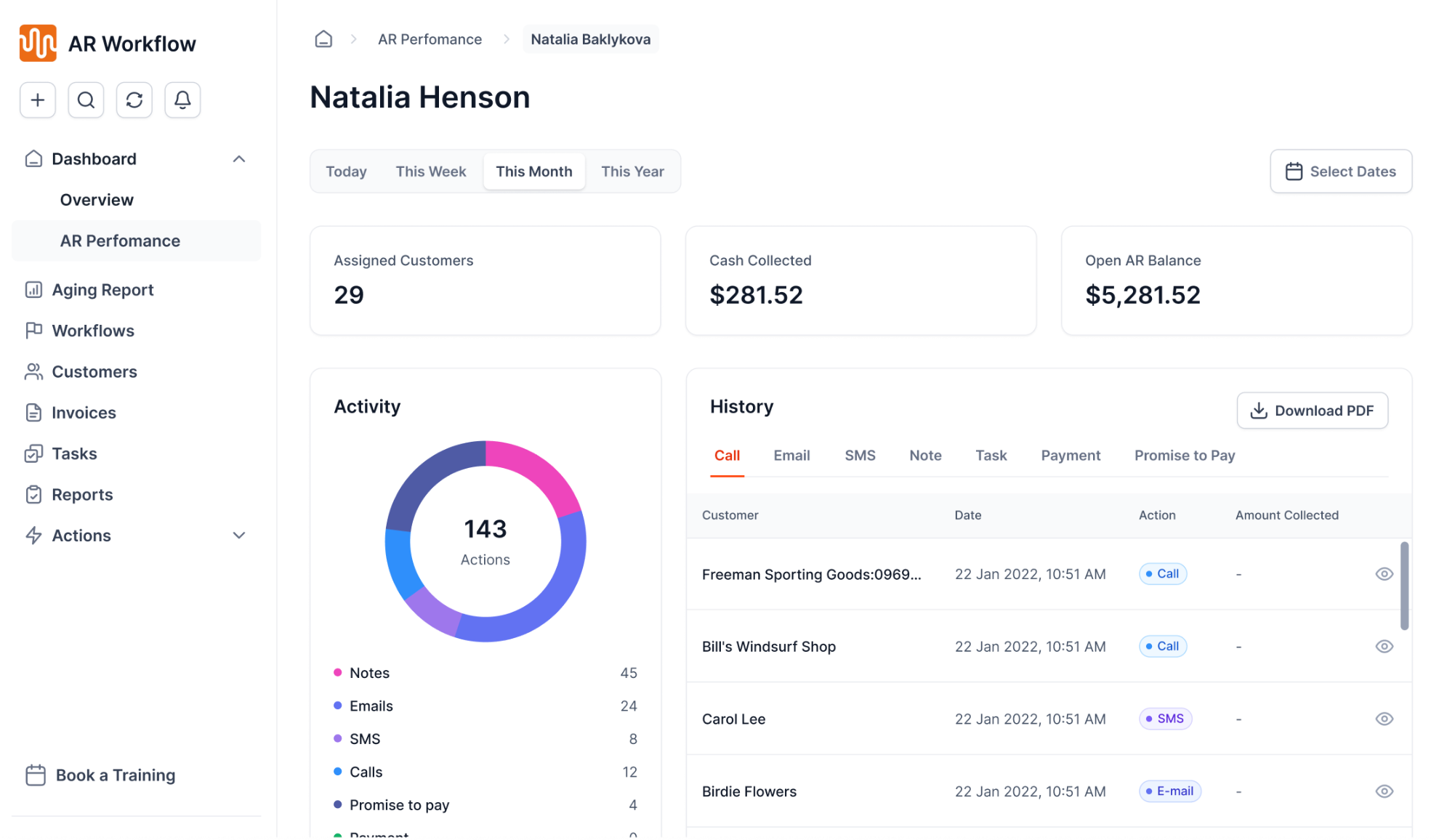
The AR Workflow dashboard shows which insurance invoices still need attention.
AR Workflow can also automate collection follow-ups through email and SMS reminders sent from a dedicated number, reducing the amount of manual work required to keep unpaid invoices moving.
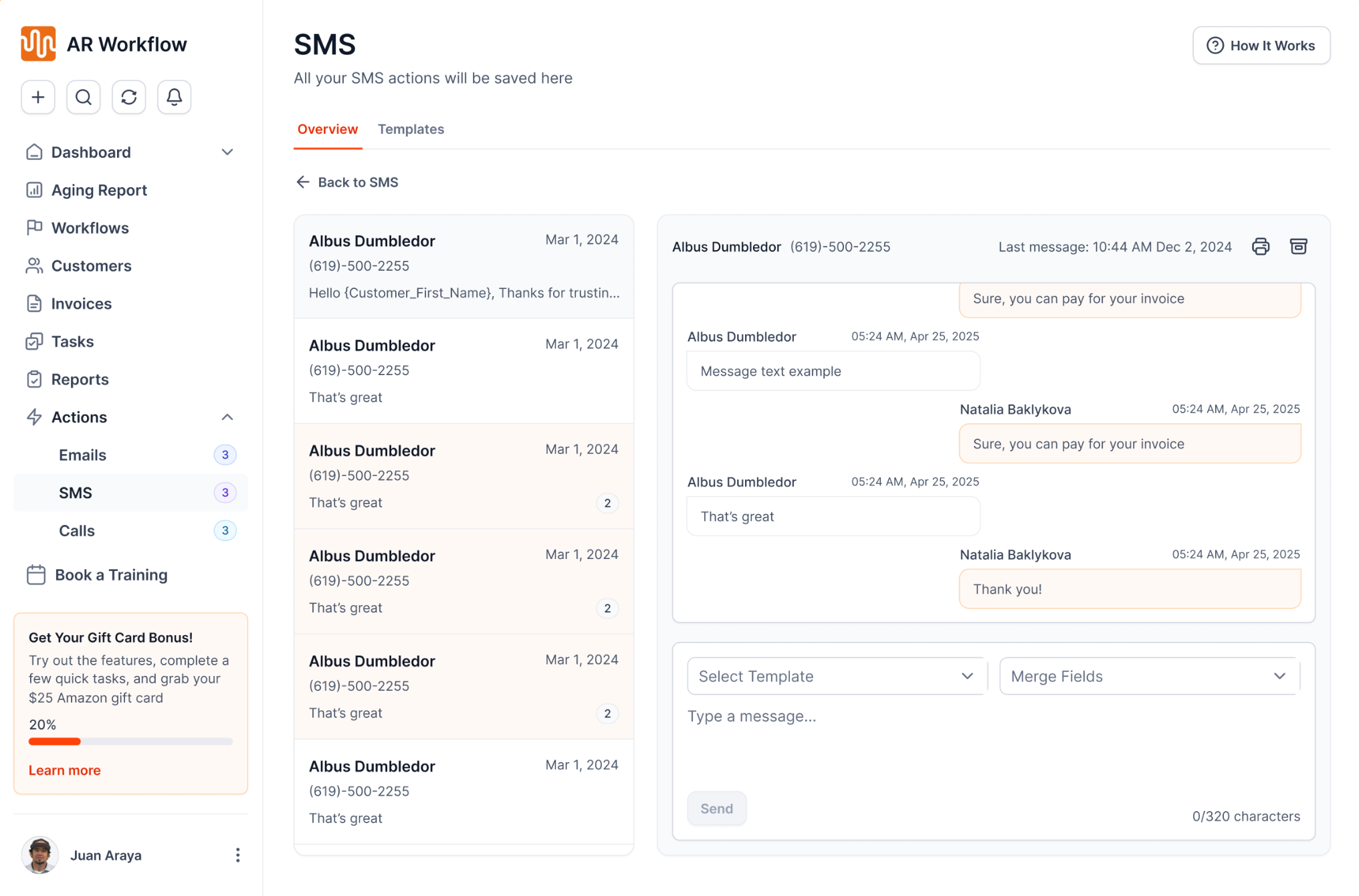
Automated email and SMS follow-ups run on the schedule your team sets.
It doesn't change what an adjuster decides or how the insurer handles the claim. But it gives your team a more structured way to manage collections and outstanding invoices until payment is resolved. If the homeowner's portion goes unpaid, our guide to collecting unpaid invoices covers the next steps.

AR Workflow connects to QuickBooks Online and keeps outstanding receivables visible.
Understanding what an insurance adjuster looks for can help your team respond when questions come up about the scope, charges, or documentation behind an invoice.
Yet even after those questions are answered, the job isn't financially complete until your company collects the money it's still owed.
So, while you can't control how quickly an insurer reviews a claim or what an adjuster ultimately decides, you can control what happens to the outstanding invoice on your side. That means knowing where it stands and making sure the right follow-up continues until the balance is resolved.
AR Workflow helps restoration companies manage that part of the process without adding more manual collection work for the team.
It keeps outstanding receivables visible, syncs with QuickBooks Online, automates follow-ups through email and SMS, and gives owners and finance teams a clearer view of the money they're still waiting to collect through AR reporting. For the full picture of collecting from all three parties on a claim, read how restoration contractors collect from carriers, adjusters and homeowners.
Getting the invoice through adjuster review is only one part of the process. Your restoration company still needs to collect the money it has earned to support cash flow and put it back into the business.
Adjusters check that the invoice matches the claim number, property address and job dates, that each line item describes work actually performed, and that labor hours, materials and equipment days are reasonable for the documented damage. They also compare the invoice with the original estimate and ask for photos, moisture readings or equipment logs when a charge needs support.
An insurance restoration contractor is hired to repair properties damaged by events such as water, fire, smoke, or storms. They can handle residential and commercial restoration work when the property owner is filing an insurance claim for the damage.
The contractor performs the restoration work, while the insurance adjuster evaluates the loss as part of the insurer's claims process.
Restoration work may follow water, fire, smoke, storm, mold, or other damage to the structure or personal property. Whether that damage triggers a homeowners insurance claim for personal belongings depends on the cause of the loss and whether the policy provides benefits for that type of damage.
A restoration contractor may provide photos, moisture readings, equipment records, estimates, and other documentation that supports the work and charges listed on the invoice. Keeping these records organized can make it easier to answer an adjuster's questions about the scope of work or specific charges.
A supplement is a request to add work or costs that were not in the original approved estimate, usually because hidden damage was found after work began. It should include photos, moisture readings and a clear note of when the new damage was found. The adjuster reviews it the same way as the original estimate.
No. Questions during review can involve scope, charges, documentation, or coverage, and they do not automatically mean an invoice has been rejected. They tell your team what needs clarification or additional records before the claim can move forward.
Related reading
Your invoice, not a feature tour.
Bring one overdue invoice to a demo and see what AR Workflow would send, when, and how your customer would pay.
Sam owned and ran three restoration companies for more than 14 years and collected over $100 million in receivables. He built AR Workflow in 2020 to give contractors the collections system he wished he'd had.

AI writes the emails, sends the texts, and leaves the voicemails. Your team handles the conversations that matter, and your cash keeps moving.
 Keep QuickBooksStart with one invoiceStay in control

 Log in