Insurance restoration contractor guide: how restoration companies work with insurance, why claims stall, how to win insurance work and get paid faster.


For an insurance restoration contractor, every job ties up a lot of time, labor and equipment. So when a project wraps up, the last thing you want is to spend several more weeks trying to collect payment for work you have already completed.
Unfortunately, getting paid for insurance claim restoration work is not always straightforward. Even after your team finishes the job, the insurance company may need additional documentation or clarification before approving certain charges, and the check may still have to pass through a homeowner or a mortgage lender before it reaches you.
So what can an insurance restoration contractor do to prevent unnecessary delays and get paid sooner? Below we walk through how restoration insurance claims work, what each type of claim needs, why claims stall, what to do when an insurance claim is taking too long, an adjuster follow-up schedule you can copy, and a five-step process to speed up payment.
KEY TAKEAWAYS
An insurance restoration contractor is a restoration company whose work is mostly paid for through property insurance claims. After a water, fire, mold, storm or sewage loss, the contractor responds, stops the damage from spreading (mitigation), documents the loss, and then cleans, repairs or rebuilds the property. The work is the same as any restoration job. What makes it "insurance restoration" is that the scope, the pricing and much of the paperwork have to satisfy a carrier before the job is paid.
In practice that means an insurance restoration contractor does three jobs at once:
Most restoration companies are set up well for the first job. The second and third are where cash gets stuck, and they are what the rest of this guide covers. If you are comparing tools for the field side, our roundup of restoration contractor software covers job management and estimating.
Insurance claims can involve several parties, and each has a different role in getting restoration work approved and paid for. Understanding who is responsible for each part of the process helps contractors know what to expect and who to contact when questions or delays arise.
Here is how the process generally works:
Keep in mind that insurance approval and contractor payment are not always the same step. Even after the insurer issues payment, the contractor may still need to collect the outstanding amount from the appropriate party.
| Party | Role in the claim | What they need from you |
|---|---|---|
| Property owner | Files the claim, signs the work authorization, often receives the check | A clear contract, their deductible amount, and a simple way to pay |
| Insurance adjuster | Reviews the loss and the charges | An itemized estimate or invoice, photos, moisture logs, and the claim number |
| Insurance carrier | Settles the claim and issues payment | An approved scope and any paperwork the policy requires |
| Mortgage lender | May be named on the check and control release of funds | Invoices, lien waivers or inspection results, depending on the lender |
| Restoration contractor | Documents, performs and bills the work | Payment, once every other party has done their part |
A common question from homeowners and new owners alike is how restoration companies work with insurance. The short answer: your contract is usually with the property owner, the insurer decides what the policy covers, and the adjuster is the person who connects the two. A few working rules keep that relationship clean.
The homeowner or business owner signs your work authorization and is responsible for paying you, even when the insurance company is funding most of the job. Spell out in the authorization what happens to the deductible, any work the carrier does not approve, and upgrades the owner asks for. The claim settlement is between the owner and the insurer; your invoice is between you and the owner.
Some contractors ask the owner to sign an assignment of benefits (AOB), which transfers some claim rights to the contractor, or a direction to pay, which asks the insurer to pay the contractor directly. Some states have restricted or banned AOBs on property policies, and the rules vary by state and change often. Talk to a construction attorney before you use either form. Our guide to direct insurance billing covers the billing side.
Many carriers and adjusters write and review property estimates in Xactimate, so restoration companies that estimate in the same format usually get fewer questions on line items and pricing. Whatever tool you use, the estimate should map cleanly to the adjuster's scope so differences are easy to find and discuss.
Send adjusters photos, logs, estimates, supplements and status requests. Send the homeowner the invoice for their portion with a card or ACH payment option. Never send a payment link to an adjuster or carrier. When a check is issued to the homeowner and the mortgage lender, help the homeowner through the lender's loss draft process. Our guide to collecting from carriers, adjusters and homeowners walks through each payer.
Insurance restoration claims involve different types of property damage, but the policy determines which incidents count as covered losses. Here are the most common.
Water damage restoration claims arising from sudden incidents such as burst pipes or accidental plumbing leaks are common. If the insurance policy covers the incident, the contractor may need to perform water extraction and remove damaged materials. The team may also need to dry affected structures before repairs can begin to prevent further damage.
To support these services, contractors should document the extent of the water damage and keep records of the drying process. Moisture readings and equipment logs, for example, can help explain how long the drying equipment needed to remain on-site.
However, coverage depends on what caused the water damage. Standard homeowners insurance generally excludes flooding from external water sources and may also exclude damage resulting from gradual leaks or poor maintenance. That is why identifying the water source early helps contractors prepare the documentation that supports the reported loss.
Unlike water damage restoration, fire and smoke restoration often involves areas beyond the location where the original damage occurred. Smoke residue and odors can spread through a residential or commercial property, requiring cleaning in areas that flames never reached. Depending on the extent of the damage, contractors may also need to remove debris or provide construction services to repair affected structures.
Standard property insurance policies typically cover fire and smoke damage, subject to the policy's terms and exclusions. However, the adjuster still needs to understand which areas the fire or smoke affected and why the contractor performed the services. For example, photographs showing smoke residue in adjoining rooms can help explain why the restoration team included those areas in the cleanup.
Mold remediation claims require particular attention to the source of the moisture that caused the mold to develop. Insurance policies often limit or exclude mold damage resulting from long-term moisture problems. However, some policies provide coverage when mold develops after a sudden incident that the insurer covers, such as an accidental pipe burst.
Because of this distinction, contractors need to document the causal relationship between the moisture source and the reported mold damage. If a pipe bursts and moisture remains inside a wall cavity, the restoration team's photographs and moisture readings can help explain how that incident contributed to the mold growth, and why the contractor needed to remove certain materials or treat additional areas.
Storm damage can affect different parts of a property during the same incident. For example, high winds may damage a roof and allow rainwater to enter the building. The restoration company may then need to repair the roof and address the resulting interior water damage or structural damage.
Although both problems came from the same storm, the insurance company may need to evaluate the causes separately. Standard homeowners insurance commonly covers wind and hail damage, while flooding from rising water generally requires separate flood insurance. Document the source of damage in each affected area and explain the work associated with it, so the adjuster can review each charge under the appropriate coverage.
Sewage backup restoration involves cleaning contaminated water after wastewater enters a property through a drain or sewer connection. Because sewage can contain harmful contaminants, contractors may need to remove affected materials, perform specialized cleaning, and dry the structure after the cleanup.
However, standard homeowners insurance often excludes sewer or drain backup unless the property owner has purchased additional coverage. For that reason, document the cause of the backup and the extent of contamination, with photographs of affected materials and records of the cleanup work.
Tip: Regardless of the type of restoration work, ask the property owner for their policy's declarations page and any endorsements (such as water backup coverage) at the start of the job. Knowing the coverage early tells you how much to collect from the homeowner up front.
Bring one overdue invoice.
We'll show you how the homeowner, the adjuster and the mortgage company would each be followed up on an insurance restoration job.
Knowing what insurance may cover is one part of managing a restoration claim. Contractors also need to understand why a claim can remain unresolved even after they have submitted the necessary information. There are several reasons this can happen, and identifying the issue is the first step toward addressing it.
After a contractor submits an invoice for insurance restoration work, the adjuster needs to review the charges before the insurer determines how much it will cover. The invoice tells the adjuster what the contractor is charging, but it does not always explain why the work was necessary. To evaluate those charges, the adjuster also needs supporting records that show the damage and the services the restoration team performed.
For example, suppose your company bills for five days of structural drying after a water damage incident. The adjuster may want to understand why the drying equipment needed to remain on-site for that long. If your team includes moisture readings and equipment logs, the adjuster can review the conditions that required continued drying. Without those records, the adjuster may need to request more information, and your team has to locate the records and respond, which adds another step to the process.
Even when the adjuster has the supporting documents, they may still disagree with the amount your company charges or the work included in the invoice. This usually comes down to a difference between the contractor's estimate and what the adjuster considers necessary under the claim.
For example, your team may remove sections of drywall after finding moisture inside the wall, and the adjuster may question whether the damage justified removing those materials. Rather than simply insisting that the charges are correct, explain what your team found during the assessment and provide the moisture readings or photographs that support the decision. If the adjuster reduces line items or pricing, our guide to insurance price reductions covers how to respond.
The same approach applies when the restoration team discovers additional damage after work begins. If the new findings require work beyond the original estimate, document the damage and explain why the additional services were necessary. Your company may need to submit a supplemental estimate (often called a supplement or supplemental claim) for the insurer to review.
Supplements are a common reason a final invoice differs from the initial estimate. To keep them from stalling payment, send them as soon as the extra damage is found rather than at the end of the job, include photos and measurements, reference the original claim number, and confirm in writing that the adjuster received them.
Even after the adjuster finishes reviewing the restoration charges, the contractor may still have to wait for payment, depending on the insurer's process and applicable state insurance regulations. The insurance company still needs to finalize the claim settlement based on the policy's actual cash value or replacement cost provisions before issuing the funds. How the insurer sends that payment can also affect when the restoration company receives its money.
For example, an insurer may issue a claim check jointly to the property owner and their mortgage lender. In that situation, the mortgage lender may need to endorse the check or approve the release of the funds before the homeowner can use the money to pay the contractor. So even though the insurance company has already issued the settlement, the restoration invoice may remain unpaid until the homeowner completes those additional steps.
If your team encounters this situation, start by confirming whether the insurer has issued the payment and whether the mortgage lender still needs to release the funds. That way, your team can identify what is delaying the payment and contact the appropriate party instead of repeatedly requesting an update from the adjuster.
When a restoration insurance claim stalls, the fix depends on who you are waiting on. Use this table to decide the next step.
| Where the claim is stuck | Who to contact | What to send or ask |
|---|---|---|
| Adjuster has not reviewed the invoice | Adjuster | Confirm receipt, ask if anything is missing, ask for an expected review date |
| Adjuster requested more information | Your project manager, then the adjuster | The specific photos, logs or explanations requested, in one reply |
| Charges disputed or reduced | Adjuster | A line-by-line response with the records that support each charge |
| Supplement pending | Adjuster | Confirmation it was received and a status update |
| Check issued to homeowner | Homeowner | A reminder of the balance due and a payment link |
| Check waiting on lender endorsement | Homeowner and the lender's loss draft department | The lender's requirements for releasing funds, and any documents you can provide |
Put every status request in writing (email works) and note the date, who you spoke with and what they promised. If an adjuster stops responding, ask for the adjuster's supervisor or the claims manager. Policyholders can also contact their state's department of insurance if a claim is not being handled, and most states have fair claims practices rules, many based on the National Association of Insurance Commissioners (NAIC) Unfair Claims Settlement Practices model act, that set standards and timeframes for how insurers handle claims. Those rules vary by state and usually protect the policyholder rather than the contractor, so the homeowner is often the one who has to make that call.
The different delays we have covered require different responses. Missing documentation needs additional records, while a disputed charge requires the contractor to explain the work more clearly. When the insurer has already issued payment, the next step may involve contacting the property owner rather than the adjuster.
Although contractors cannot control every part of the insurance process, they can reduce preventable delays by preparing accurate documentation and maintaining consistent communication. Here are five practical steps to help speed up insurance claim payment.
Documentation for an insurance restoration claim should explain the damage your team found and why the work was necessary. Start by describing the affected areas and recording the conditions your team observed during its initial assessment. Be accurate about the extent of the damage. Avoid exaggerating the conditions or leaving out details that help explain the scope of work.
Depending on the project, your supporting records may include:
Along with documenting the damage, make sure your work authorization clearly explains the services your company will perform. The contract should also identify the applicable costs and payment terms. Obtain the signatures required for the agreement before proceeding with work that needs authorization. If the team discovers additional damage during the project, document those findings and obtain any necessary approval for changes to the original scope.
After documenting the restoration work, do a final walkthrough to make sure your invoice reflects the services your team performed. The adjuster should be able to review a charge and understand what work it represents. For example, if your team extracted standing water and operated drying equipment for several days, identify those activities separately when the billing method requires it.
Include the relevant quantities and service dates so the charges correspond with the supporting records. Before submitting the invoice, check that it references the correct property and claim number, and that the final charges reflect any changes your team documented. Our guide to how adjusters review contractor invoices lists what they check first.
Submitting a clear invoice and supporting documentation gives the adjuster what they need to begin reviewing your charges. However, your team still needs to check whether the adjuster received everything and whether any questions remain unresolved.
Start by confirming receipt of the documents and asking if the adjuster needs any further information. If the adjuster questions a particular charge, respond with records that explain it. For example, when they ask why drying equipment remained on-site for several days, provide the moisture readings and equipment logs that support the drying period.
Record when your team contacted the adjuster and what you discussed. If they request more information or identify another review step, note who needs to take action and when your team should check back. Keeping that communication history helps anyone on your team continue the conversation without repeating previous questions or overlooking an outstanding request.
Adjusters carry heavy caseloads. A steady, polite schedule keeps your file near the top without burning the relationship. Start the clock the day you send the final invoice and documents.
| When | Channel | What to ask |
|---|---|---|
| Day 0 | Send the invoice, photos, logs and claim number in one email. Ask them to confirm receipt. | |
| Day 3 | Email or phone | Confirm they have everything. Ask if anything is missing. |
| Day 10 | Ask for a review status and an expected decision date. | |
| Day 20 | Phone, then email recap | Ask what is holding the file and who needs to act next. Put the answer in writing. |
| Day 30+ | Email to adjuster and supervisor | Polite escalation with the dates of every past request. Let the homeowner know where things stand, since they are the policyholder. |
Sample email
Subject: Claim [number], [property address]: status check
Hi [Adjuster name], following up on the final invoice and documents we sent on [date] for claim [number]. Can you confirm you have everything you need? If anything is missing, tell me what and I will send it today. When do you expect to finish your review?
Thanks, [Your name], [Company], [phone]
Keep it short, keep it about status and documents, and never include a payment link. For more on building a good working relationship, see our guide to working with insurance adjusters.
Insurance companies do not always send settlement funds directly to restoration businesses. Depending on the payment arrangement, the insurer may send the money to the property owner, who must then pay the contractor according to their agreement. A mortgage lender may also play a role when the insurer issues a check jointly to the homeowner and lender.
In that situation, your team needs to confirm where the money currently sits. If the insurer has issued payment but the homeowner is still waiting for the lender to release it, contacting the adjuster again will not resolve that delay. By identifying who is responsible for the next step, your billing team can direct its follow-up to the right party and keep track of what still needs to happen before your company receives payment.
Knowing who owes the payment and what needs to happen next gives your billing team a starting point. The next challenge is keeping track of that information as your company handles more restoration jobs.
Consider two unpaid invoices. One is waiting for an adjuster to review additional documentation, while the other involves a homeowner who has already received the insurance settlement but has not paid your company. Both invoices remain outstanding, but the first requires a claim status update, while the second calls for payment communication with the homeowner.
To manage these situations, maintain a record of each invoice's balance and the latest communication. Assign someone to handle the next action and record when they should follow up. You can also review your aging report to identify invoices that have remained unpaid for 30, 60, or 90 days, then check each account's communication history to understand why payment remains outstanding.
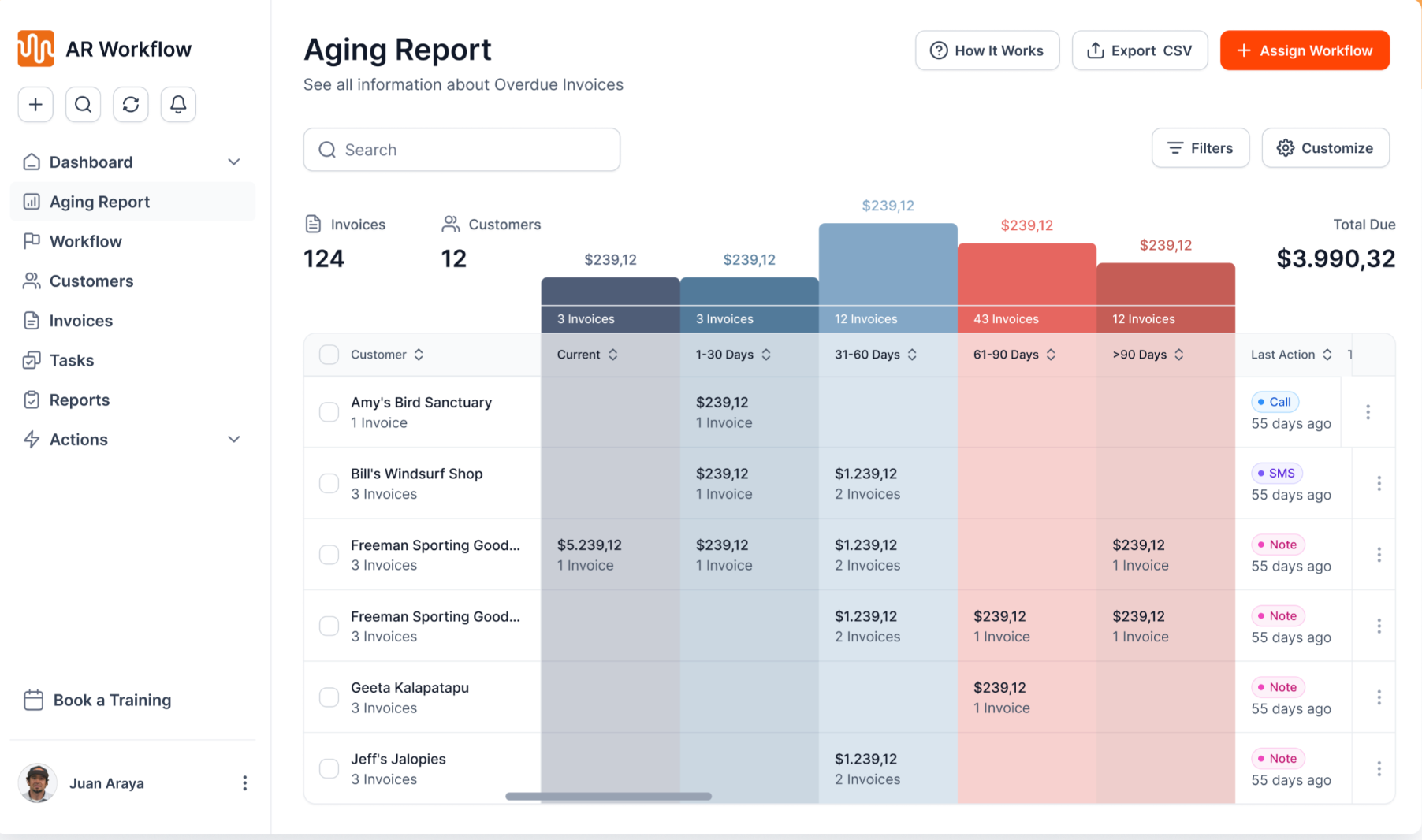
An aging report shows which insurance restoration invoices need follow-up and how long each has been open.
This gives your team a clear reason for the next follow-up instead of sending reminders without knowing the account's current status. As your invoice volume grows, however, maintaining those records and scheduling every follow-up manually can take more time than your team has available.
Getting paid faster matters most when there is steady work to get paid for. If you are building an insurance restoration business, or adding insurance jobs to a cash business, these are the channels most restoration companies use to win claims work.
Some states restrict how contractors can solicit work after a storm or other disaster, and some regulate what a contractor can say about a homeowner's claim. Check your state's rules before you launch door-to-door or storm-chasing campaigns.
More insurance work also means more invoices waiting on adjusters, homeowners and lenders. Plan for it early: a clear mitigation invoice format, an aging report you review every week, and a payment option the homeowner can use from their phone, such as the card, ACH and payment plan options on our contractor payments page.
AR Workflow is accounts receivable software that helps restoration companies manage this process by automatically scheduling payment reminders by email, two-way text and ringless voicemail from a dedicated number, based on your collection workflows. Homeowners get a payment link for card or ACH. Adjusters get status requests, never a payment link.
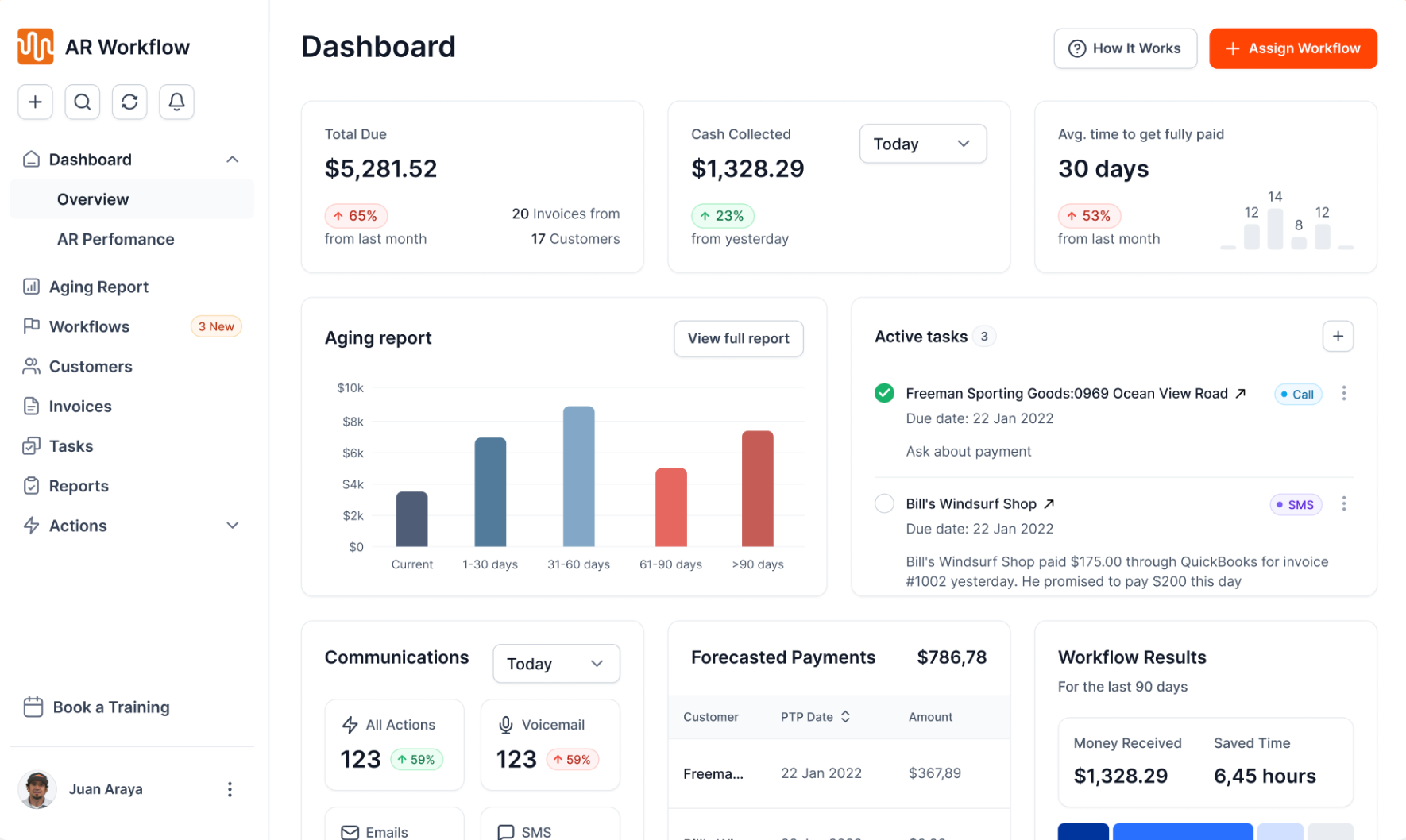
The dashboard shows outstanding invoices and recent payment activity in one place.
It also gives billing teams a clear view of outstanding invoices and previous payment activity, so they can quickly see which accounts still need attention. With these tasks handled in one place, your team can keep up with collections as invoice volume grows without manually tracking every reminder or payment update.
Getting paid for insurance restoration work starts with making sure the insurance company has what it needs to review your charges. But your responsibility does not end when the insurer approves the claim. You still need to know who owes the payment and make sure your team follows up until your company receives it.
AR Workflow helps restoration companies stay on top of that final part of the process by automating payment reminders and keeping outstanding invoices organized, so fewer payments slip through the cracks and your team is not stuck constantly checking on unpaid invoices.
Insurance restoration involves repairing or cleaning up property damage under an insurance claim. Depending on the loss, the work may include water mitigation, fire and smoke cleanup, mold remediation, or structural repairs. An insurance restoration contractor is the company that does that work and bills it against the claim, usually through the property owner.
Confirm receipt within three days of sending the final invoice and documents, ask for a status and decision date around day 10, call around day 20, and escalate politely to the adjuster's supervisor after 30 days with no answer. Keep every request in writing and ask only for status and documents, never for payment through a link.
First find out who is holding the money: the adjuster, the homeowner or the mortgage lender. Send adjusters status requests and documents, send homeowners reminders with a card or ACH payment link for their portion, and help homeowners through the lender's release steps. Log every contact and promised date, and review the aging report weekly.
It depends on the insurer, the policy, the documentation and how the check is issued. Many states have prompt-payment or fair claims practices rules that set timeframes for insurers to acknowledge, decide and pay claims, but the rules vary by state. Joint checks with a mortgage lender can add more time after the insurer pays.
Do not exaggerate damage, guess about its cause, or make claims about restoration costs without supporting records. Instead, explain what your team found and provide documentation that supports the work performed.
Yes, insurance can cover restoration work when the policy covers the cause of the damage. Coverage often includes sudden fire or accidental water damage, while flooding, gradual deterioration, and mold may have exclusions or require additional coverage.
A supplemental claim, or supplement, is a request for additional payment when the contractor finds damage that was not in the original estimate. Send it as soon as the damage is found, with photos, measurements and the original claim number, so the adjuster can review it before the final invoice.
Insurance may cover emergency mitigation work before the insurer approves the claim, provided the policy covers the cause of the damage. Contractors should document the work and keep records of the costs so the adjuster can review the charges.
Related reading
Bring one overdue invoice.
See how AR Workflow follows up on insurance restoration invoices, or visit our restoration page.
This article is general information, not legal or insurance advice. Coverage depends on the policy, and claim handling rules vary by state.
Sam owned and ran three restoration companies for more than 14 years and collected over $100 million in receivables. He built AR Workflow in 2020 to give contractors the collections system he wished he'd had.

AI writes the emails, sends the texts, and leaves the voicemails. Your team handles the conversations that matter, and your cash keeps moving.
 Keep QuickBooksStart with one invoiceStay in control

 Log in