
Restoration insurance billing is the process of documenting the restoration work your company completed and billing for that work as part of an insurance claim. That may seem straightforward, but sending the final invoice is only one part of the process.
The real challenge is everything that can happen between billing the job and seeing that money reach your account. A question about the scope, missing documentation, or a supplement that still needs review can keep the process going long after the work itself is finished.
So, how do you keep an insurance-related job moving from start to finish? In this guide, you'll learn everything you need to know about restoration insurance billing.
TL;DR
- Restoration insurance billing takes a completed restoration job through documentation, final billing, submission, review, and ultimately payment.
- Billing problems often start with missing documentation, changes to the original estimate, additional reviews, or scattered customer communication that makes the status of an invoice harder to track.
- Restoration companies can reduce those problems by setting documentation requirements, checking final bills against completed work, and keeping billing activity easier for the team to track.
- An invoice can still have an outstanding balance after submission or approval, so restoration companies need to treat billing status and payment status as separate parts of the process.
- AR Workflow helps restoration companies handle what comes after billing by automating collection follow-ups and giving teams clearer visibility into outstanding AR until those invoices turn into collected revenue.
How Does Restoration Insurance Billing Work?
Restoration insurance billing covers the work required to turn a completed restoration job into a bill that can move through the insurance claim process and, eventually, toward restoration payment.
The exact process can vary by job. The insurance company, property owner, mortgage company, and other parties involved in the claim can affect what happens before the restoration company receives its money.
Still, the restoration company's side of the process generally follows a similar path, and here's what that looks like.
1. Finalize the Job Documentation
Once the restoration work is complete, the records from the job become part of the billing process.
These records can include work authorizations, photos, drying records, equipment logs, and material records. What you need depends on the type of loss and the work performed.
These records play a key role in supporting the services and charges included in the final bill. For example, if drying equipment remained on the property for several days, the job records can show how long it was used.
2. Prepare the Estimate and Billing
Once the job documentation is ready, you can turn the completed work into the final bill.
The original estimate may provide the starting point, but the final amount can change based on what actually happened during the job. Additional work may have been required, or equipment may have remained on site longer than originally estimated.
Those changes are then reflected in the final billing. If the completed work differs from the original estimate, the final bill shows what the restoration company is charging based on the work that was actually performed.
3. Submit the Billing Documentation
After that, the invoice and any required supporting documents are sent to the appropriate party.
Who receives them depends on how the claim and payment are structured. The restoration company may communicate with an insurance company, insurance adjuster, property owner, or another party involved in reviewing the bill.
Submitting the bill doesn't necessarily finish the billing process. The documents may still need to go through review before the amount is approved or payment can proceed.
4. Handle Reviews and Supplements
Once the bill is under review, questions may come back about the scope, documentation, or individual line items.
For example, the reviewer may ask for more detail about equipment usage or a difference between the original estimate and the completed work.
If additional work became necessary during the job, the restoration company may also need to submit a supplement supporting the additional amount.
The review continues while those questions or changes are addressed. A request for clarification doesn't necessarily mean the entire invoice has been rejected. It may simply mean more information is needed before that portion of the claim can proceed.
5. Track the Outstanding Payment
Even after the billing and review stages are complete, the restoration company may still need to wait for an outstanding balance to be paid.
Even after the insurer pays the claim, the restoration company may not receive the money immediately. Depending on how payment is structured, the property owner, insurer, mortgage company, or another party may still be involved.
The billing process doesn't necessarily end at approval. It reaches its final financial outcome when the restoration company is actually paid.
Common Restoration Insurance Billing Problems
Even experienced restorers can run into a few common issues with the billing process, and these are some of them:
- Missing or incomplete documentation: If the records don't clearly support the work being billed, your team may need to provide more information before the invoice can move forward.
- Changes between the estimate and completed work: Restoration jobs can change once work begins. When the final scope differs from the original estimate, those changes need to be clearly documented and explained.
- Reviews and supplements: Questions about specific charges or additional work can lead to another round of review, which adds more steps before the final amount is settled.
- Scattered communication: Emails, phone notes, and claim updates can end up in different places. That makes it harder for the next person handling the account to know what has already happened.
- Poor visibility into outstanding payments: An invoice may have already been submitted or approved while the balance is still unpaid. Without clear tracking, the team can lose sight of what still needs attention.
These problems often become more noticeable as the company gets busy and the number of insurance-related jobs grows. A clearer billing process helps the team keep each invoice moving without relying on memory to know what should happen next.
How to Improve Your Restoration Insurance Billing Process
Improving insurance billing starts with making the process easier for your team to repeat.
The goal isn't to assume every claim will follow exactly the same path but to create enough consistency around the work your company controls so employees don't have to figure out the process again for every invoice.
Here are a few tips on how to make that happen:
Set Documentation Requirements Before the Job Reaches Billing
Don't leave each employee to decide what constitutes a complete billing file. Set clear requirements based on the type of restoration work so the billing team knows what should be available before preparing the invoice.
This gives the team a chance to catch missing records before submission, when those gaps are usually easier to address.
Review the Final Bill Against the Completed Work
Before sending the invoice, compare it with what actually happened on the job.
If the scope changed from the original estimate, make sure the final charges reflect those detail changes and the job records explain them. This can reduce questions later about why the invoice differs from what was originally estimated.
Keep Billing Communication in One Place
Emails and phone conversations with customers become difficult to track when they stay with individual employees.
Keep a clear record of important billing activity so the next person handling the account stays in the loop on what was requested, what your team provided, and what still needs a response.
Separate Billing Status From Payment Status
Don't use “submitted” or “approved” to indicate that an invoice is finished.
Track whether the bill has been submitted separately from whether the money has actually been received. This makes it much easier to see which completed jobs are still sitting in accounts receivable (AR).
Set Clear Next Steps for Unpaid Invoices
Once an invoice remains unpaid, the team should know what happens next.
Set a process for identifying invoices that need attention and assigning the next action. Keep previous collection activity visible as well so employees don't have to search through emails or rely on memory before contacting the payer.
In-House vs. Outsourced Restoration Insurance Billing
Not all restoration companies need to manage insurance billing the same way. The right approach depends partly on how much billing work the restoration business handles and how much internal expertise it already has.
With in-house restoration insurance billing, the company keeps the process in-house. One benefit is direct control over documentation, communication, and billing activity. It also means the company needs enough internal capacity to keep that work moving as job volume changes.
Outsourcing shifts some or all of that billing work to a third-party service. One advantage of outsourcing is that it can help when the company lacks the time or specialized billing resources to manage the process internally.
The restoration company still needs visibility into what has been submitted and what remains unresolved, since outsourcing the work doesn't make the underlying receivable disappear.
Automated software can also help support the work your team already handles in-house. Its role depends on which part of the billing process you need help managing. For example, estimating software serves a different purpose from accounting or AR software.
So the question isn't simply whether your company should upgrade and use software. It's which part of the process you're trying to improve.
What to Do After Insurance Billing
Getting the insurance billing right puts the invoice in a better position to move through the claim process. But it still doesn't guarantee that your restoration company will get those bills paid.
When a balance remains outstanding, the team's job changes. Employees need to know how long the invoice has been open, what has already happened, and whether someone needs to take the next action.
Unfortunately, that's hard to manage when collection activity stays on paper, in spreadsheets, emails, phone notes, and even in employees' memories.
A structured accounts receivable process can help. It gives your team a clearer way to manage outstanding invoices and stay consistent with collection activity until payment comes in.
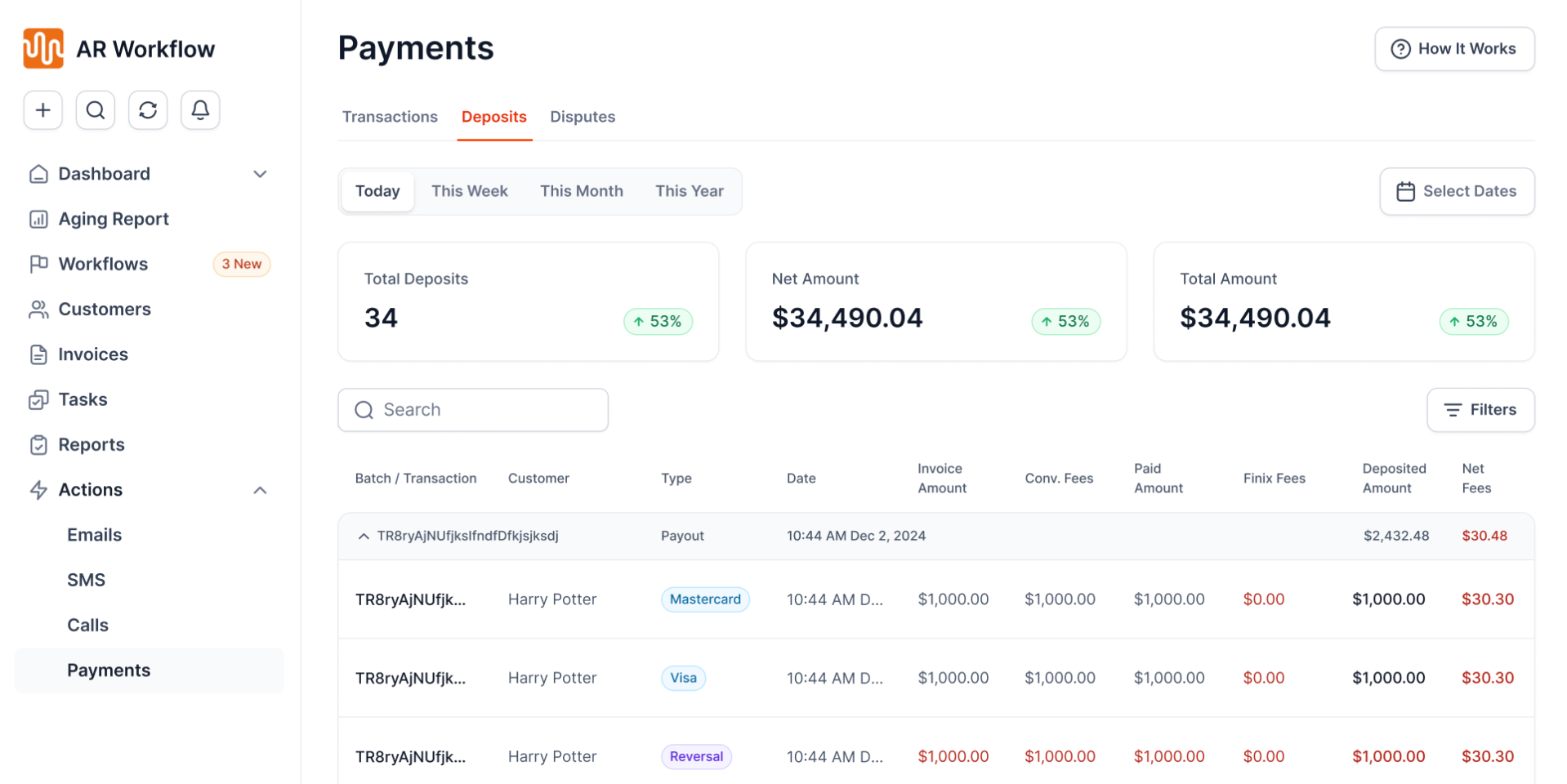
AR Workflow was built specifically to help restoration companies manage this part of the process through automation and seamless integration with their existing systems.
It gives teams a more organized way to manage outstanding receivables and the collection work that comes after insurance billing.
Improve Your Cash Flow With AR Workflow
Every restoration job requires your company to put resources into completing the work before all of that revenue necessarily reaches your bank account.
So once the invoice has gone through the restoration insurance billing process, the remaining balance deserves the same level of attention as the work that earned it.
The longer that money remains in accounts receivable, the longer your business has to cover overhead without access to cash it has already earned.
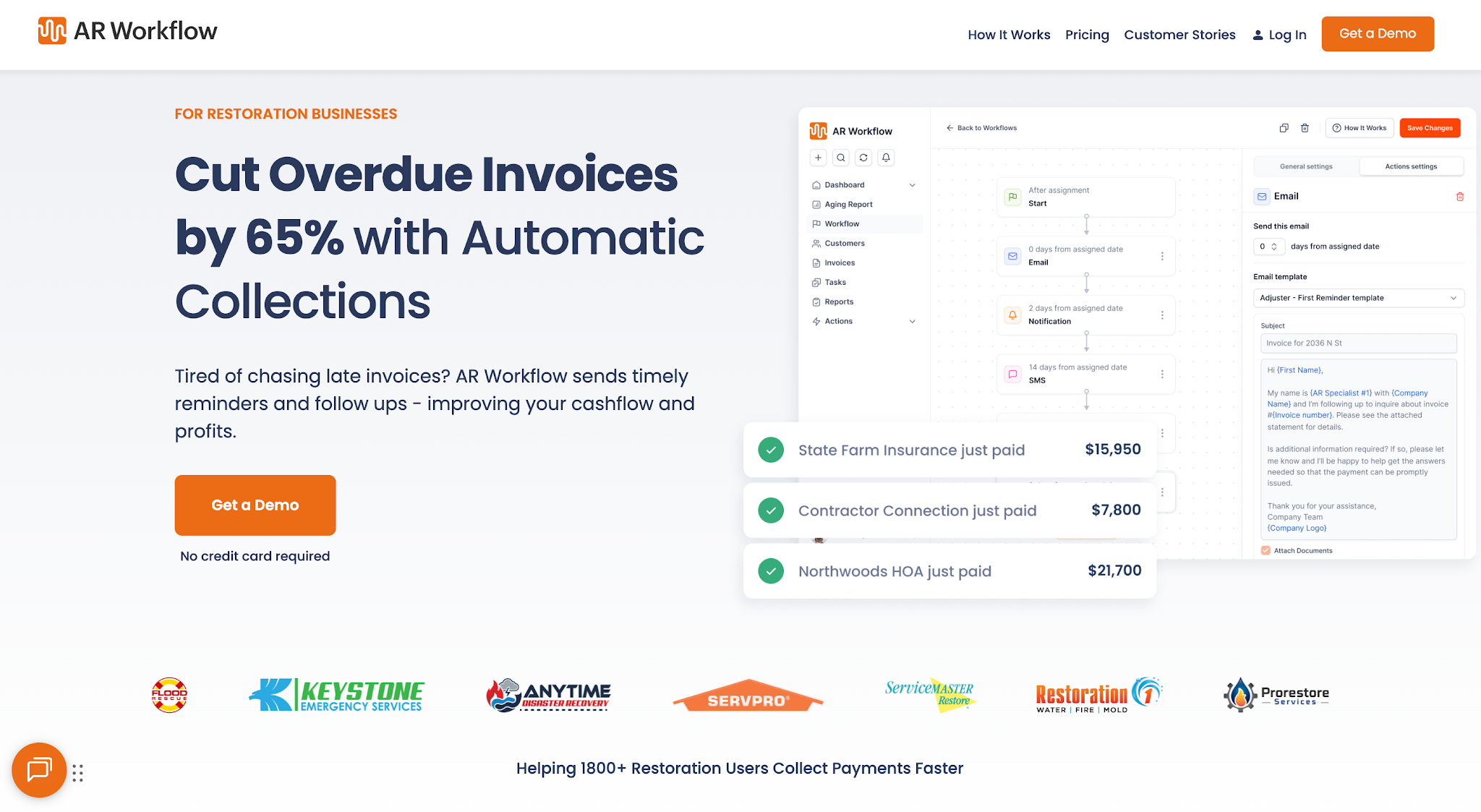
That’s the problem AR Workflow is designed to help restoration companies resolve. With automated collection follow-ups and clearer visibility into outstanding AR, your team can spend less time manually chasing unpaid invoices and focus on keeping collection activity moving.
Because completing the restoration work and sending the bill are only part of getting paid. The sooner your team can turn more money from those outstanding invoices into collected revenue, the sooner it can improve your cash flow and help your business generate more profit.
FAQs About Restoration Insurance Billing
How long does it take for restoration contractors to get paid?
The time it takes for restoration and mitigation contractors to see their claims paid can vary by claim and insurance provider, although insurance-related payments typically take around three to eight weeks.
What can delay payment on a restoration invoice?
Missing documentation, questions about charges, additional reviews, and supplements are some of the common things that can delay payment on a restoration invoice.
Who is responsible for paying a restoration contractor?
The contract determines who is responsible for paying the restoration contractor.
Insurance involvement doesn't automatically mean the insurer pays the contractor directly. The insurer can issue payment to the property owner or include multiple parties on the payment, depending on how the claim is structured.
When should a restoration company follow up on an unpaid invoice?
A restoration company should follow up once an invoice reaches the payment deadline established in its payment terms. The team can also contact the appropriate party sooner when a known issue is preventing the invoice from moving forward.
Can restoration insurance billing be automated?
Yes, restoration companies can automate parts of the process, especially repetitive tasks related to collecting outstanding invoices.
AR Workflow is specifically built to automate this part of the process for restoration companies, helping teams automate collection follow-ups with clients and keep track of outstanding balances until payment comes in.