Working in the restoration industry makes you realize that billing for completed water mitigation work doesn't always go as expected, especially when an insurance adjuster questions the charges.
In fact, a survey from the Restoration Industry Association found that 67% of U.S. respondents expressed frustration with adjusters dictating restoration charges.
When disagreements like these happen, knowing how the billing process works can help contractors understand their options and respond appropriately.
In this article, we’ll explore how water mitigation adjuster billing actually works and what contractors should do when an adjuster questions their bill.
TL;DR
- Water mitigation adjuster billing involves submitting mitigation charges for insurance review and responding to questions about the work or pricing.
- Adjusters may review equipment usage, labor charges, and supporting job records before the insurer determines its payment position.
- When an adjuster questions a charge, contractors should request the reason, review their documentation, and explain any amount they believe the records support.
- Insurance approval doesn't always mean the contractor has received payment. The team still needs to confirm who is paying and track the outstanding balance.
- AR Workflow helps restoration companies monitor unpaid invoices and organize collection follow-up after billing.
What Is Water Mitigation Adjuster Billing?
Water mitigation adjuster billing refers to the process of submitting charges for completed water mitigation work for an insurance adjuster's review and addressing any questions that arise before the insurer determines what it will pay.
For example, a restoration contractor might submit a bill for water extraction and several days of drying equipment. The adjuster then reviews those charges against the reported damage, work documentation, and insurance claim.
If the adjuster believes the records don't support a particular charge, they may request clarification or recommend a lower amount. The contractor can respond with additional evidence or explain why the original charge was necessary for the property's safety.
It's important to understand that the adjuster generally evaluates the claim on behalf of the insurance company.
The insurer determines what the policy covers when homeowners are filing insurance claims, while the contractor's agreement with the property owner may create separate payment obligations.
How Does Water Mitigation Insurance Billing Process Work?
The water mitigation insurance billing process typically begins once the contractor has prepared a bill for the work performed. From there, the bill goes through review, possible questions or revisions, and a decision about the insurer's payment.
The exact process depends on the insurance company and the claim. However, the following steps explain what contractors can generally expect.
Step #1: Submit the Mitigation Bill to the Insurance Adjuster
Start by sending the mitigation bill through the filing or submission process required for the claim.
The bill should reflect the work performed and include documentation that helps the adjuster understand the charges. Depending on the job, this may include photos, drying records, equipment-use details, and an itemized estimate or invoice.
Before submitting, confirm the claim number, correct recipient, and any insurer-specific requirements. Sending the bill to the wrong contact or leaving out requested paperwork can lead to another round of communication before anyone reviews the charges.
Also record when you submitted the bill and keep a copy of everything you sent.
Step #2: Understand What the Adjuster Reviews
Once the adjuster receives the bill, they'll generally compare the charges with the reported damage and the supporting claim documentation.
Their review may focus on whether the work to address or prevent secondary damage was necessary, whether the billed quantities match the records, and whether the pricing is reasonable under the insurer's evaluation.
For example, suppose your company billed for five days of dehumidifier use. The adjuster may look at the moisture readings and drying logs to understand why the equipment remained on-site for that long.
The adjuster might also compare the billed scope with inspection findings, documented structural issues, or any repair estimates prepared for the insurance claim.
This review doesn't automatically mean the adjuster suspects the contractor of overcharging. They're assessing which charges the insurer should recognize under the claim.
Understanding what they're checking makes it easier to respond if they ask for clarification.
Step #3: Address Questions or Disagreements About Charges
After reviewing the bill, an adjuster may contact the contractor to challenge specific charges.
For example, they might agree that water extraction was necessary but question the number of labor hours billed. Before dealing with the adjuster's concerns, the contractor should find out exactly which charge is being questioned and why.
That gives the team something specific to address.
If the question concerns labor hours, review the job records and work performed. If it concerns equipment duration, check the drying logs. The response should explain how the records strengthen the case for the charge rather than simply repeating the original amount.
Keep the discussion focused on the work and the evidence. It also helps to maintain thorough documentation of the adjuster's questions and the contractor's responses so the team can refer to them if the disagreement continues.
Step #4: Provide Additional Documentation or Revisions When Needed
After discussing the questioned charges, the adjuster may request more documentation.
For example, the adjuster might want additional moisture readings from affected walls to support several days of drying. The contractor can provide the necessary documentation and explain how it relates to the equipment charges.
If the original bill contains an actual error, correct it and make the revision clear. Address a duplicate charge or incorrect equipment quantity rather than defending it.
However, a requested reduction doesn't automatically mean the contractor made a billing mistake or that the reduction was unfair. When the records support the original charge, the contractor can explain that position and ask the adjuster to reconsider.
If the disagreement remains unresolved, the next step may depend on the insurer's review procedures and the policyholder's available options to pursue further review.
Step #5: Confirm the Insurance Company's Billing Decision and Payment Status
After the review, confirm which charges the insurance company has accepted and whether any amounts remain disputed.
Ask for a written explanation of reductions when necessary. That helps your team distinguish between an amount the insurer has denied and an amount that is still under review.
Next, confirm whether the insurer has issued the claim payout or whether further processing is required.
An approved amount doesn't necessarily mean the contractor has received the money. The insurer may issue payment to the policyholder, but complications can arise when a mortgage company also needs to endorse the claim check.
The contractor should therefore track the actual payment status and identify who is responsible for the outstanding balance under the applicable agreements.
That gives the billing team a clearer picture of what remains unpaid and what needs attention next.
What Happens When an Adjuster Reduces a Water Mitigation Bill?
Suppose your company submits a $12,000 water mitigation bill, but the adjuster determines that the insurer should allow only $9,000. The remaining $3,000 represents charges the adjuster has questioned or excluded from their assessment.
Before deciding what to do, request an explanation of the reductions. Review the specific line items and the reasons the adjuster gave for changing them.
If the adjuster reduced equipment charges because they believe the drying period was too long, compare their assessment with the job's moisture readings and drying records. If those records support the original duration, explain why and request another review.
When the disagreement involves the insurer's interpretation of policy coverage, the policyholder may need to seek clarification or use an available claim dispute process to pursue a fair settlement.
Contractors should avoid presenting themselves as licensed public adjusters or negotiating coverage on a policyholder's behalf unless applicable law permits it.
A reduced insurance payment also doesn't automatically mean the contractor must reduce its invoice by the same amount. Review the service agreement and applicable law before deciding how to handle any remaining balance.
The goal is to establish what the insurer will pay, whether further review is possible, and who remains responsible for the difference.
How to Manage Outstanding Water Mitigation Payments
Once the insurance company communicates its payment decision, the next priority is making sure the money reaches the appropriate recipient and the contractor's outstanding balance gets resolved.
A claim may show an approved payment while the contractor's invoice remains unpaid. For example, the insurer may have sent the check to the homeowner, who still needs to arrange payment to the restoration company.
Claim payments may involve the policyholder, contractor, or mortgage lender, depending on the circumstances. Mortgage lenders sometimes need to endorse checks before the funds can be released.
To keep track of outstanding payments, the billing team should record the amount still owed, the expected payer, and the latest payment update.
If a payment hasn't arrived when expected, check whether the insurer has issued it and whether another party needs to take action. If a balance remains disputed, record that separately so the team doesn't treat it like an ordinary overdue invoice.
Regular follow-up helps employees identify which payments are progressing and which accounts need investigation for delays.
Where AR Workflow Steps In
Keeping track of these payment updates can become overwhelming and create additional stress when a restoration company has dozens of outstanding invoices.
That's exactly what AR Workflow helps restoration companies address.
The platform connects with QuickBooks and provides visibility into outstanding invoices, including aging balances and payment status. Teams can also track customer communications and organize collection tasks, making it easier to see which accounts need attention.
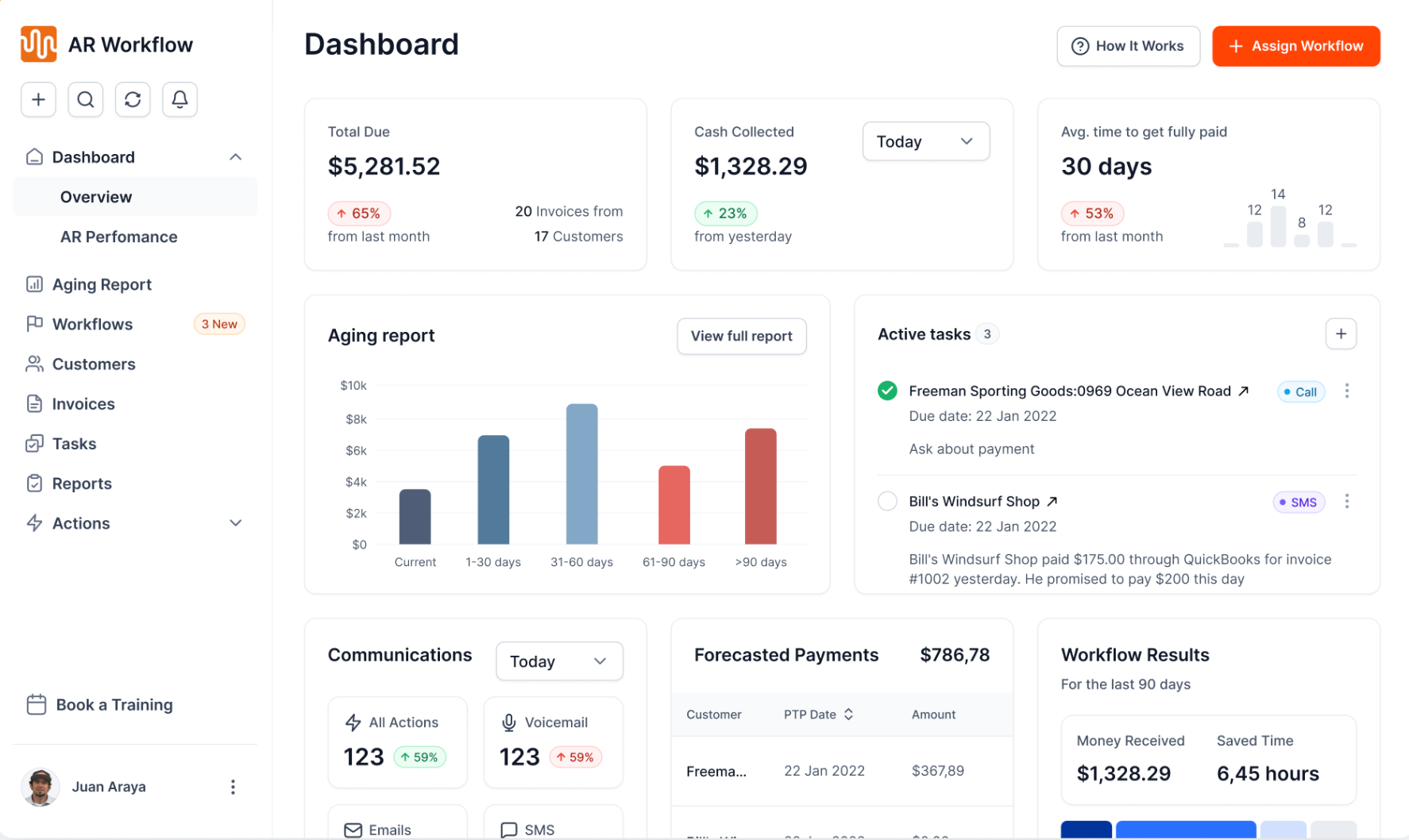
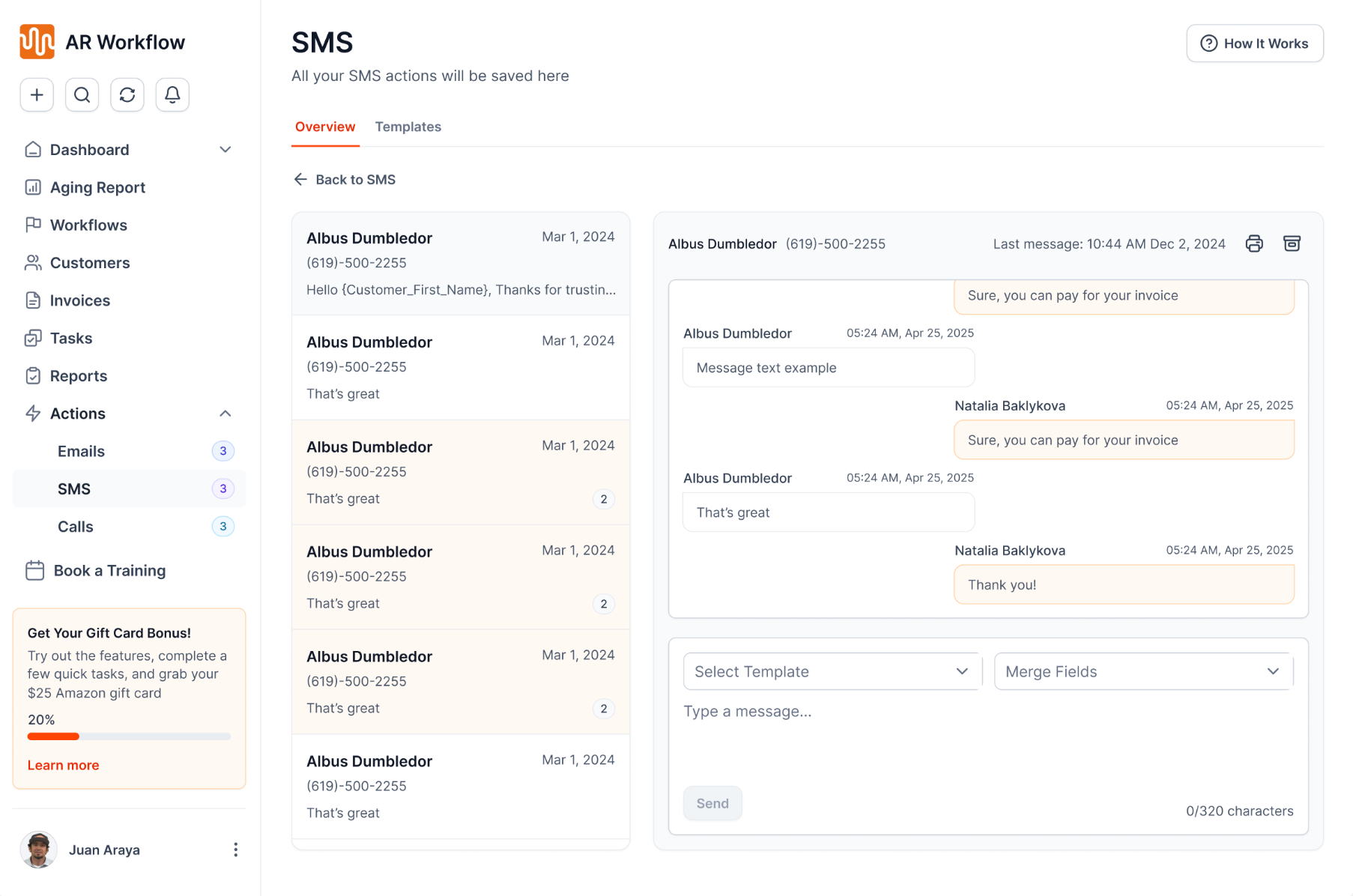
For invoices that are ready for collection, AR Workflow supports automated email and SMS reminders. Customers can also use secure payment links to settle their balances online.
Insurance disputes and unresolved claim questions may still require personal attention. AR Workflow helps the team manage collection activity while those issues receive the appropriate follow-up.
Simplify Water Mitigation Payments With AR Workflow
Understanding water mitigation adjuster billing helps restoration contractors respond more confidently when an adjuster questions their charges. Clear explanations and supporting job records give the insurer information to reconsider disputed amounts.
But even after the insurance company agrees to the charges, there's still the question of when the payment will actually arrive. If your team isn't tracking those outstanding payments, delays can go unnoticed and disrupt expected cash flow.
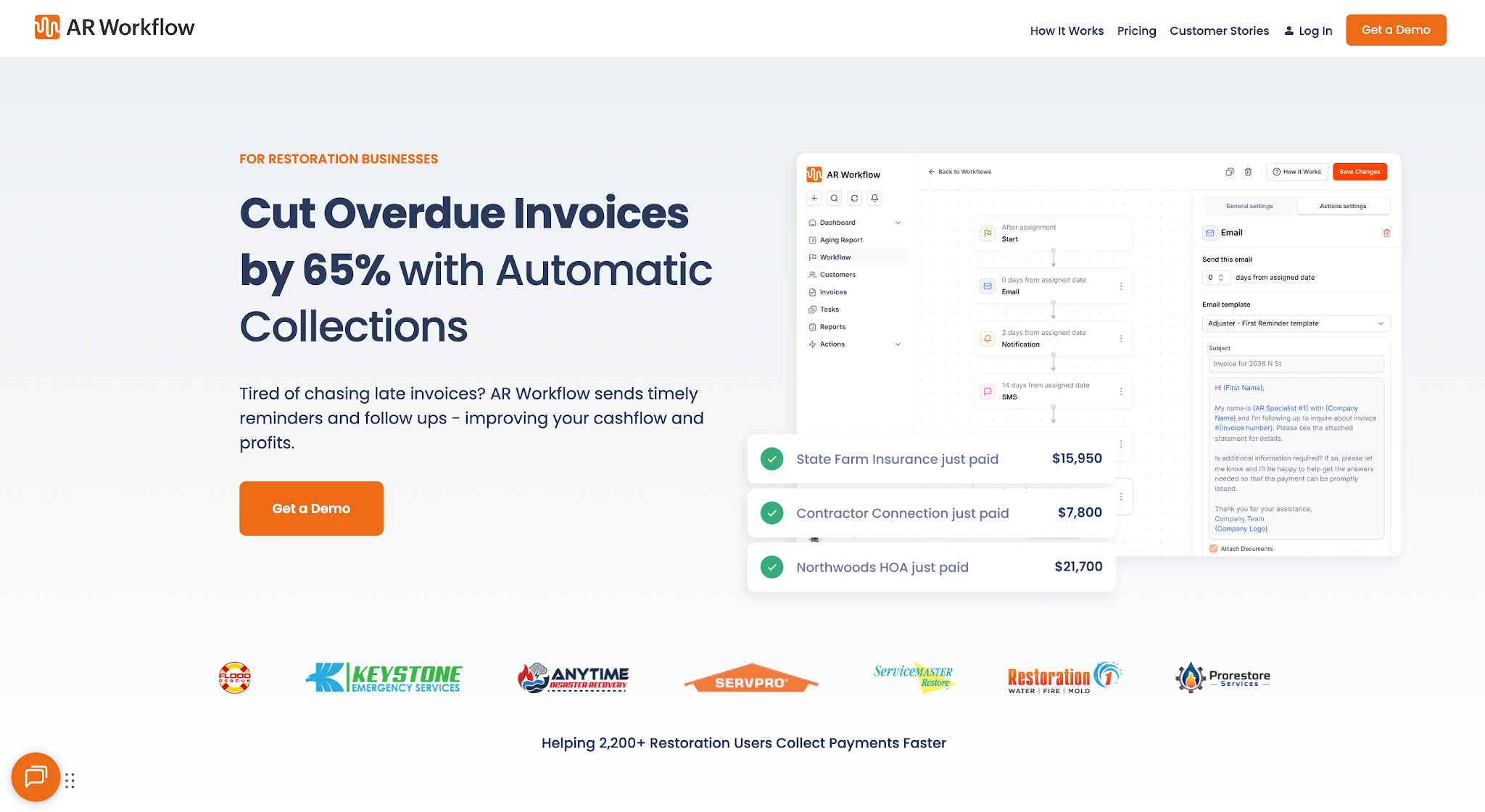
That's exactly what AR Workflow helps restoration companies address. By keeping outstanding invoices visible and automating the collections process, the platform helps your team stay on top of payments that still need attention.
Getting your charges approved is only part of the process. Making sure your company actually collects the money you deserve is what completes the job.
FAQs About Water Mitigation Adjuster Billing
What not to say to a claim adjuster?
Avoid admitting fault without evidence, guessing the cause of the damage, exaggerating the extent of the loss, or agreeing to a settlement before you understand what it covers. Stick to the facts you can verify and ask for clarification when you're unsure about something.
Does insurance pay for water mitigation?
Yes, homeowners insurance typically covers water mitigation when the damage results from a covered event, such as a sudden pipe burst or accidental appliance leak.
However, coverage depends on the policy, and damage from gradual leaks, including long-standing roof leaks, or flooding may require separate coverage or may be excluded.
How much does a water mitigation company charge?
Water mitigation costs vary depending on the extent of the damage and the equipment and labor required.
For reference, Angi's 2026 cost data puts the average water damage restoration project at $3,868, with costs ranging from $450 to $16,000. However, these figures include broader restoration work, so mitigation-only charges may differ.
What not to say to an insurance adjuster about water damage?
Avoid making statements such as "The damage has been there for months" unless you have evidence to support them. Also, don't speculate about hidden moisture, mold growth, exaggerate repair costs, or agree that certain work was unnecessary before reviewing the documentation.
Keep your answers factual and supported by the inspection findings.