Your client needs a water damage restoration invoice for the work you have completed. Now you need to turn everything that happened on that job into a bill that clearly shows what they are paying for.
Depending on the job, there is quite a bit to account for. So how do you make sure your invoice is complete?
In this article, we cover everything you need to include, from the job and insurance details to the services completed and final charges. We also show what the finished invoice can look like, how to create one, and what to do if the balance remains unpaid after you send it.
KEY TAKEAWAYS
- A water damage restoration invoice is the final bill for completed restoration work and should clearly show the services performed, their charges, previous payments, remaining balance and payment instructions.
- A complete invoice also connects the bill to the specific restoration job through customer and property details, service dates and relevant insurance claim information.
- A water damage estimate outlines the expected work and costs before restoration is completed, while the final invoice reflects the work actually performed and the amount ultimately due.
- Before sending the invoice, confirm the completed scope, gather supporting job information, itemize the final charges and account for deposits or previous payments.
- If payment remains outstanding, AR Workflow can reduce the time restoration teams spend manually chasing invoices by managing collection follow-ups and overdue balances.
What is a water damage restoration invoice?
A water damage restoration invoice is the final bill a restoration company issues for completed water damage work. It documents the services performed, the charges associated with those services, any payments already received, and the amount still owed.
The exact invoice depends on the job. A project may involve emergency water extraction as well as drying and moisture monitoring. It can also require related services such as demolition, cleaning and sanitizing after sewage contamination, or mold remediation.
The invoice provides a financial record for each part of the project. That helps the customer or other payer understand how the total amount relates to the work completed at the property.
Why it matters
Water losses can represent significant amounts of money for the parties involved. Verisk reported in its 2026 Water Loss Severity Update that non-catastrophe water-loss severity for homeowners increased 45% over the five-year period from Q3 2020 through Q2 2025.
As the financial value of water losses rises, accurately accounting for completed work deserves attention. A vague invoice with one total gives the recipient little information about how that amount was calculated.
A detailed breakdown of the restoration charges creates a clearer record. For example, if the company used drying equipment for several days or made multiple monitoring visits, the invoice can show those charges separately.
What should a water damage restoration invoice include?
A water damage restoration invoice needs enough information for the recipient to identify the job, understand the charges, see what remains due, and know how to pay it.
That does not mean adding every piece of information collected during the project. The invoice should focus on the details needed to document the bill clearly, while supporting job records can provide more when required.
| Invoice section | What to include |
|---|---|
| Business and customer information | Your business name and contact details, the billed party, billing details and the service address |
| Invoice and job details | Invoice number, issue date, job or project number and service dates |
| Insurance and claim information | Insurance carrier, claim number and adjuster information when needed |
| Itemized services and charges | Each completed service on its own line with its charge |
| Labor, materials and equipment | Costs that make up each charge, including equipment and days on site |
| Payments and final balance | Deposits and previous payments, then the remaining balance |
| Payment terms and instructions | Due date, accepted payment methods and any agreed late-payment terms |
The main sections and water restoration invoice line items to include on every bill.
Business and customer information
Start with the basic information identifying both sides of the transaction. Include your restoration company's legal or business name and contact information. Then identify the customer or party being billed and provide their billing details.
The service address also deserves attention when it differs from the customer's mailing address. Restoration companies may handle several jobs for the same property owner, property manager or commercial client, so the invoice should make the affected property easy to identify.
Invoice and job details
Invoice and job details identify the bill and connect it to the specific restoration project it covers. They help your team and the recipient know exactly which job, service period and bill they are looking at.
Start with an invoice number and the date you issued the invoice. If your company assigns a job or project number to each water damage restoration project, include that as well.
Also include the dates when the work took place, especially if the project lasted several days. This connects the charges on the invoice to the period when your team performed the work.
Insurance and claim information
Insurance and claim information connects the invoice to the insurance claim associated with the water damage job. When insurance is involved, these details help the people reviewing the invoice identify which loss and claim the charges relate to.
That is why it is important to include the relevant information available for the job, such as the insurance carrier, claim number and adjuster information when needed.
You do not need to turn the invoice into a complete insurance file. Keep this section focused on identifying the claim connected to the restoration work.
Including claim information also does not mean the insurer is responsible for every charge on the invoice. Coverage and payment responsibility still depend on the policy and the circumstances of the loss.
Itemized restoration services and charges
Itemized services show the recipient how the restoration work adds up to the final invoice amount. Rather than presenting water damage restoration as one total charge, the invoice separates the completed work into individual services and their costs.
For example, water extraction and structural drying may appear as separate charges because they represent different parts of the restoration work.
List only the services your team actually performed on that job. Each description should be clear enough for someone reviewing the invoice to understand what they are being charged for.
Labor, materials and equipment costs
The services on a restoration invoice may involve separate costs for the people performing the work, the materials required, and the equipment used at the property. Showing these costs when appropriate gives the recipient more information about what makes up each charge.
Equipment costs, for example, may depend on what equipment was used and how long it remained on the job. If air movers and dehumidification equipment were used for several days, the invoice can show the equipment used and the number of days it remained on site.
Labor and material costs follow the same principle: include enough detail to connect the cost to the completed restoration work without reproducing the entire project record on the invoice.
Payments and final balance
The final balance tells the recipient how much of the invoice still needs to be paid after accounting for money already received. This matters most when the customer has paid a deposit or another payment was applied earlier in the job.
Show those previous payments separately before stating the remaining balance. For example, if the completed work totals $12,000 and the customer already paid a $2,000 deposit, the invoice should show both amounts before stating the $10,000 still due.
That gives the recipient one clear amount to pay. It also gives your team the correct outstanding balance to track if the invoice later moves into collection follow-up.
Payment terms and instructions
Payment terms and instructions tell the recipient when the remaining balance is due and how they can pay it. Without them, the invoice shows exactly what someone owes without telling them what to do next.
Include the payment due date and the payment methods your company accepts. If a method requires extra instructions, provide what the recipient needs to complete the payment.
Any late-payment terms or other payment conditions should match what was already agreed to for the job. The final invoice should not introduce new payment conditions the customer has not already agreed to.
Tip: On insurance jobs, keep the homeowner's share (such as the deductible) clearly separated from what you are billing to the claim. Send payment instructions to the homeowner for their portion, and send the adjuster documentation and status requests, not a payment link.
Water damage restoration invoice example
A water damage restoration invoice template can follow a simple structure as long as the information is clear. For more layouts, see our water damage restoration invoice sample and restoration invoice template.
Invoice example
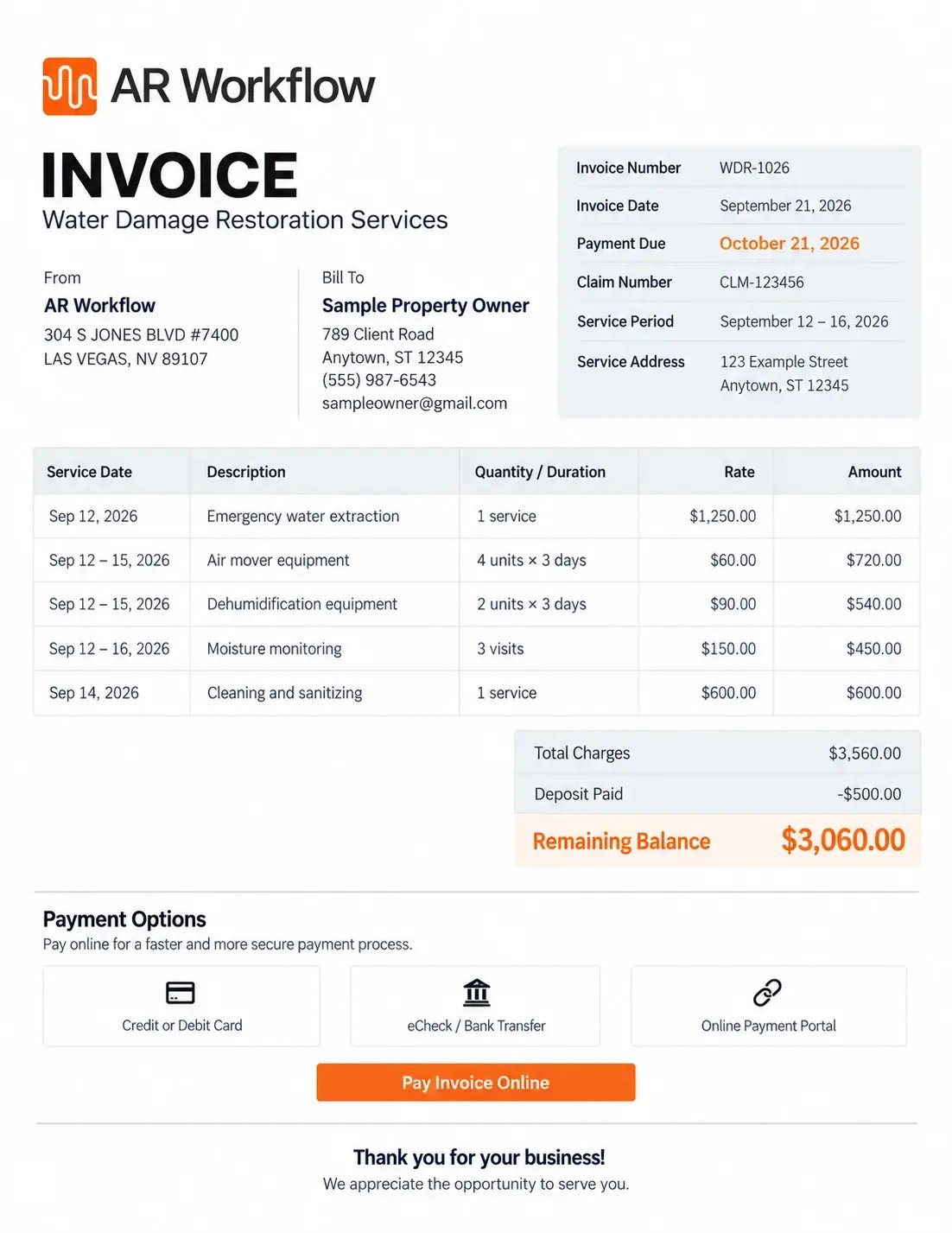
These figures only illustrate what a typical water damage restoration invoice looks like. Actual charges depend on the work performed, pricing method, market, job conditions, agreements and other project-specific factors.
Water damage estimate template
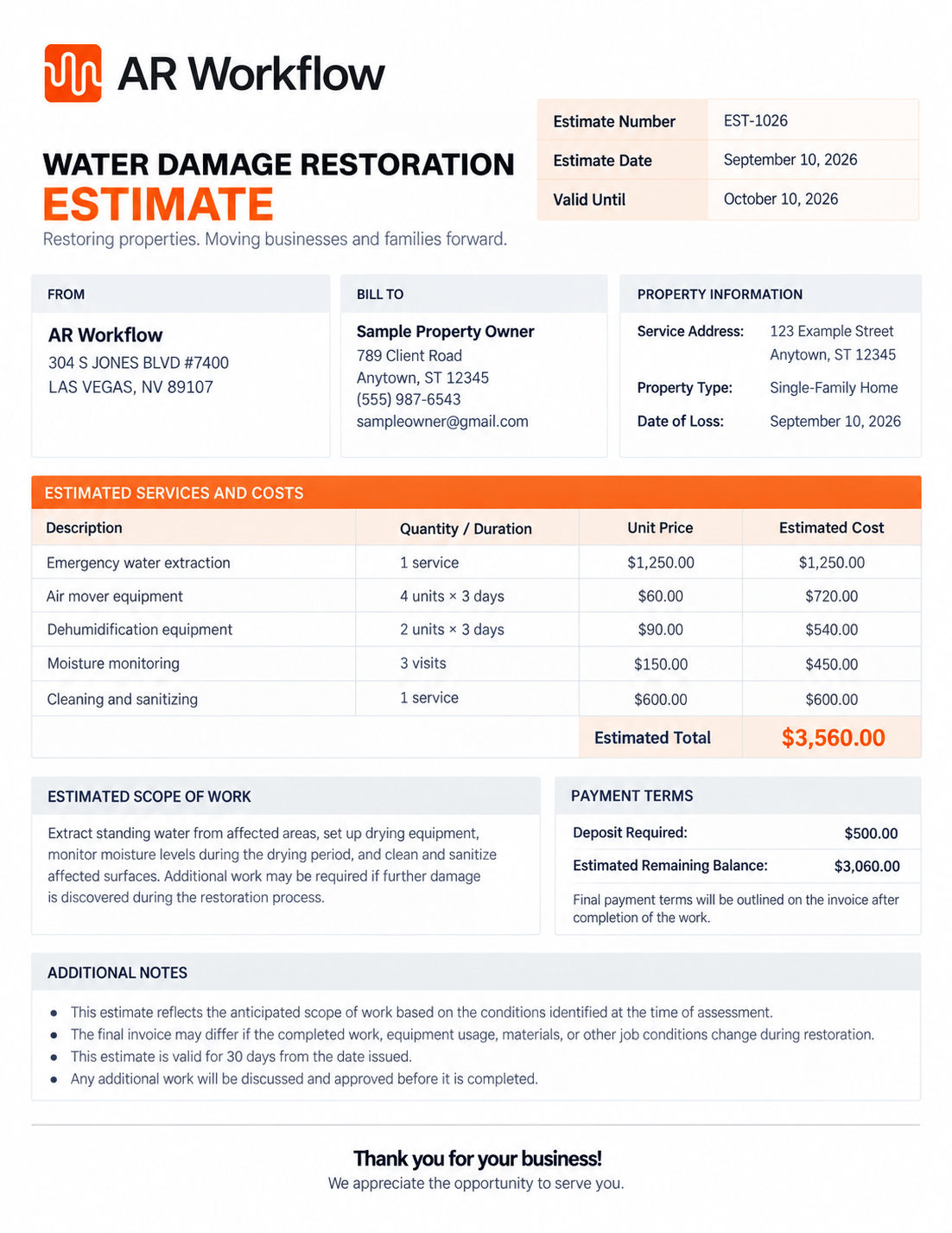
Before a water damage restoration job reaches the final invoice, there is usually an estimate outlining the expected work and what it may cost.
The estimate gives the customer or other parties an idea of the anticipated restoration costs before billing reaches the final invoice. Once the work is completed, the invoice reflects what was actually performed and the final amount due.
So if you are creating a water damage restoration invoice, it helps to understand what the estimate before it can look like. Here is a simple example:
Estimate template
How to create a water damage restoration invoice
The invoicing process starts before you begin listing completed services and their charges. Here is what it looks like:
| 1 | Confirm the work completed |
| 2 | Gather the supporting job information |
| 3 | Itemize the charges |
| 4 | Apply deposits or previous payments |
| 5 | Add payment terms and send the invoice |
Step 1. Confirm the work completed
First, review the completed scope before preparing the final invoice. Check which services your team actually performed and whether anything changed from the original estimate. Water damage projects can develop as affected areas become accessible or additional damage becomes apparent, so the final bill needs to reflect the work that occurred.
Resolve discrepancies before sending the invoice. It is easier to correct a missing service or an inaccurate equipment duration before the customer begins reviewing the charges.
Step 2. Gather the supporting job information
Next, bring together the records needed to create an accurate invoice. That can include the service dates, customer details, property address, claim information, job notes, equipment usage and previous payments.
The invoice itself does not need to contain every supporting record. But you do need enough information on hand to make sure the bill matches what your team documented during the project.
Step 3. Itemize the charges
Once you have confirmed the work completed, list each service and its charge on the invoice. Keep separate services on their own lines when needed. For example, if the job involved water extraction and several days of drying equipment, listing them separately helps the reviewer understand how each service contributed to the final amount.
Make each description clear enough for someone outside your company to understand. Avoid internal abbreviations or descriptions only your team would recognize.
Step 4. Apply deposits or previous payments
Check whether the customer or another payer has already paid anything toward the job. Apply those amounts before calculating the final balance. The invoice should show the original charges, the amount already received, and what remains outstanding.
This also gives whoever handles accounts receivable an accurate balance to work from after the invoice is sent.
Step 5. Add payment terms and send the invoice
Review the invoice one final time before sending it. Check the following:
- Recipient
- Total amount
- Previous payments
- Remaining balance
- Due date
- Payment instructions
Once everything is in order, send the invoice using the delivery method your company normally uses and keep a record of when each one was sent.
Bring one overdue invoice.
We'll show you exactly how follow-up on that water damage invoice would run.
What to do if your water damage restoration invoice goes unpaid
Even when you have created and sent a complete invoice, there is always a chance it will not get paid by the due date. When that happens, first check whether the payer received it and whether there is a question or issue holding up payment.
If not, collecting that invoice usually means following up until the balance is resolved. That is where something as simple as sending a reminder can start taking more of your team's time than expected.
You have to know which invoices need attention, when you last contacted each payer, and when it is time to follow up again. Doing that manually may be manageable with a few invoices, but it can quickly turn into hours spent chasing payments as unpaid balances pile up. Our guide to collecting unpaid invoices lays out a step-by-step plan, and our past due invoice letter templates give you wording to start from.
That is why automated collections software like AR Workflow is a good investment, especially for restoration companies with growing receivables.
Where AR Workflow takes over
Restoration teams can use custom collection workflows to streamline follow-up and automate the right email or SMS reminders, with texts sent from a dedicated number. Payment and communication tracking give the person handling the account more context about what has already happened before they decide what to do next.
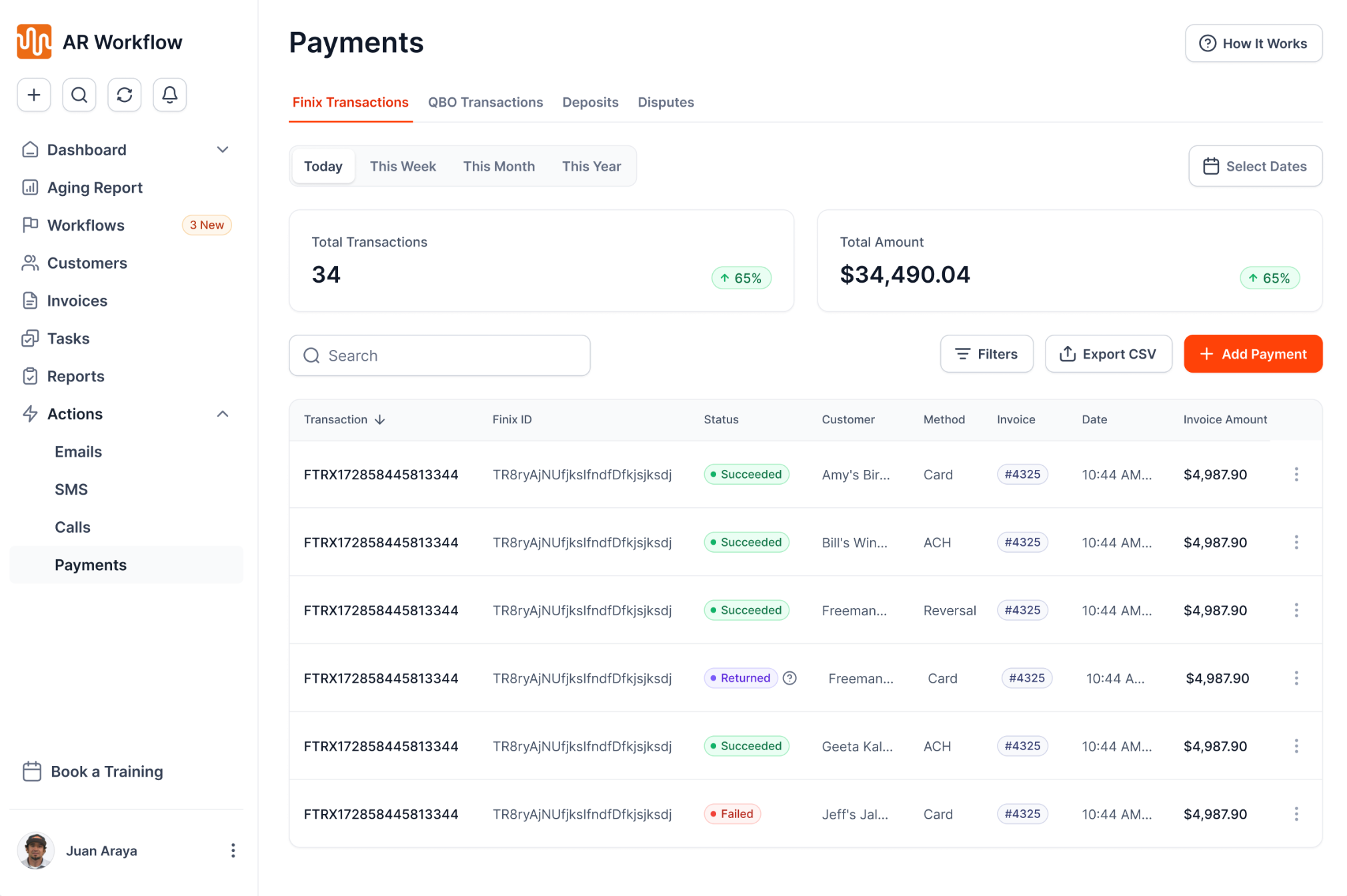
Payment and communication history for each account in AR Workflow.
AR Workflow provides visibility into outstanding receivables so owners and finance teams can see which balances still need attention. That structure reduces the collection activity employees have to coordinate by hand as invoice volume grows.
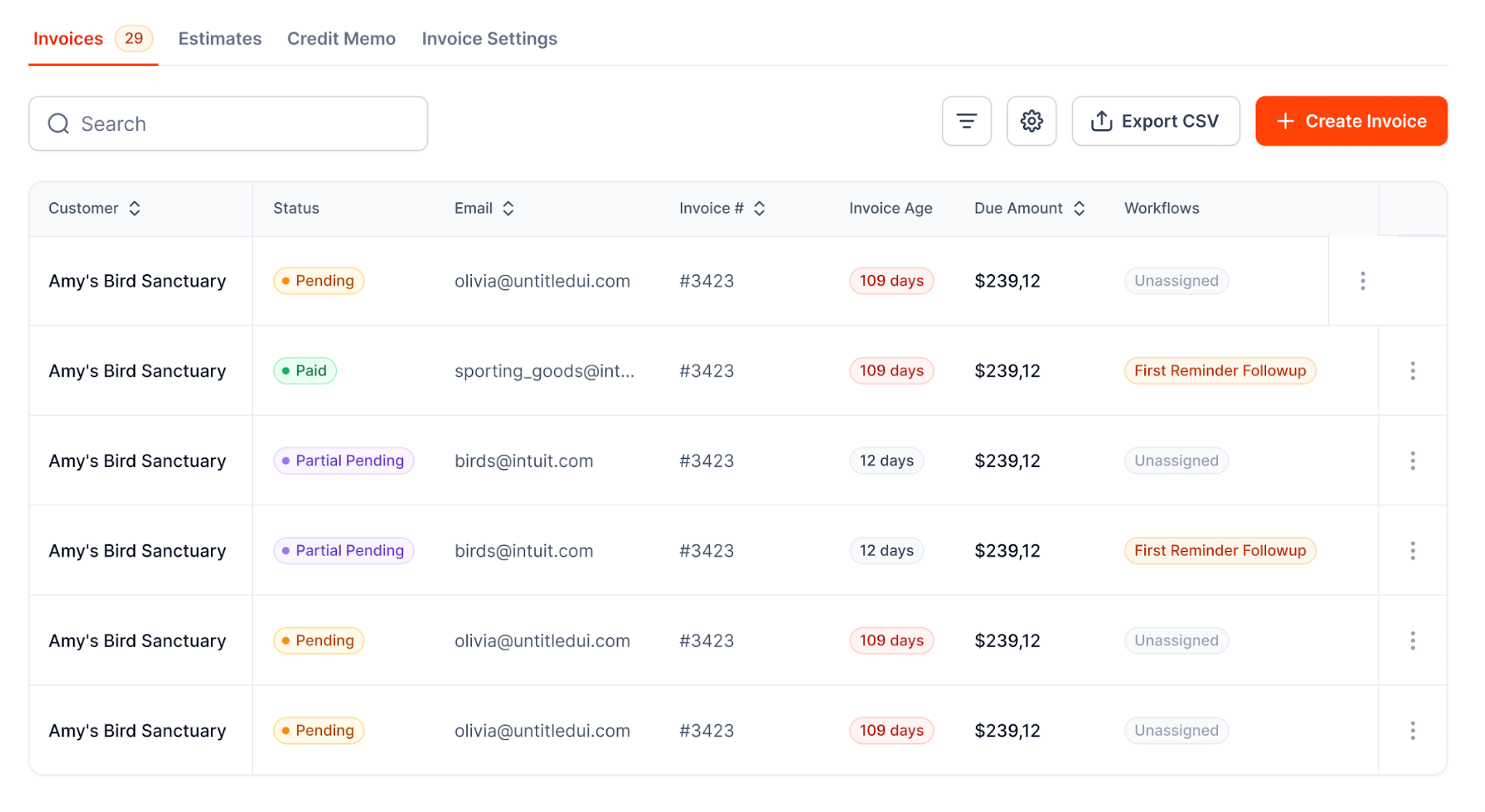
Outstanding invoices and balances in one view.
Automation cannot remove every reason a water damage restoration invoice remains unpaid. But having software handle that part of your business means your team does not have to rely on manual follow-ups every time a payment is overdue.
Get paid faster with AR Workflow

A water damage restoration invoice puts a final amount on work you have already completed. Sending it is only part of getting that money back into your business.
If payment does not follow right away, AR Workflow for restoration can take more of that manual collection work off your shoulders so you spend less time chasing overdue invoices. You have already put the time, labor and resources into completing the job. Collecting what you are owed should not be any harder.
FAQs about water damage restoration invoices
What should a water damage invoice include?
A water damage invoice should include your business and customer details, the service address, the invoice and job numbers, service dates, and the insurance carrier and claim number when a claim is involved. Then list each completed service on its own line with labor, materials and equipment days, subtract deposits or earlier payments, and finish with the balance due, due date and payment instructions.
How do you write a water damage report?
A water damage report records what happened at the property and what your team observed or completed. It may include the source and extent of the damage, affected areas, moisture readings, photographs, equipment used, work performed and relevant dates.
How do you make an invoice for repairs?
Start by identifying your business, the customer and the property connected to the repair. Add an invoice number, relevant dates, an itemized list of completed repairs and their charges, payments already made, the total amount still due, and payment instructions.
Make sure the final invoice reflects the work actually completed. If the scope changed during the project, update the invoice rather than relying entirely on the original estimate.
What does water damage restoration include?
Water damage restoration can include water extraction, removal and disposal of damaged materials, structural drying, moisture monitoring, cleaning and sanitizing. The exact services depend on the type and extent of the damage, especially if flooding was involved. Mitigation-only jobs have their own billing needs, covered in our mitigation invoice guide.
What do water restoration companies charge?
Water restoration companies usually charge based on the amount of work needed to restore the home or property, so there is no one standard price for every job. The final cost depends on factors such as the extent of the water damage, restoration services required, labor, materials, and how long drying equipment needs to remain on site.
Related reading
Your invoice, not a feature tour.
Bring one overdue invoice to a demo and see what AR Workflow would send, when, and how your customer would pay.