Customer won't pay? Use these 7 steps, scripts and a demand letter template to get paid by difficult restoration customers without burning bridges.

You've completed the restoration work, sent the invoice, and expected to receive payment by the agreed deadline. But the due date has passed, and your customer still hasn't paid. When a customer won't pay an invoice, sometimes they simply need a reminder. Others dispute every line, go silent, or refuse outright.
Meanwhile, as a business owner, you still have expenses to cover, and the longer those payments remain outstanding, the more pressure they put on your cash flow.
So, how do you get paid by difficult customers who miss payment deadlines or refuse to pay altogether? Fortunately, there are practical steps you can take to recover the money you're owed and save time chasing payments.
This guide focuses on the hard cases: difficult, slow and non-paying restoration customers, and what you can do when your usual payment reminders aren't enough. For the everyday playbook on how to collect unpaid invoices, start with our guide to unpaid invoices.
KEY TAKEAWAYS
Before you start chasing a customer for payment, it helps to understand why they haven't paid in the first place.
| Type of non-paying customer | What is going on | Where to start |
|---|---|---|
| The forgetful customer | Overlooked the invoice, forgot the due date, or hit an issue paying | A polite reminder (Step 2) |
| The disputing customer | Doesn't agree with the final amount | Address the dispute with job records (Step 5) |
| The struggling customer | Financial difficulties prevent paying on time | A written payment arrangement (Step 5) |
| The insurance-waiting customer | Waiting on the carrier to process the claim | Clarify who pays what, and when |
| The avoider | Deliberately avoids paying or stops responding | Formal demand, then outside help (Steps 6 and 7) |
Sometimes, the reason is straightforward. The customer may have overlooked the invoice, forgotten the due date, or encountered an issue during the payment process.
Other situations require more attention. A customer might dispute a charge because they don't agree with the final amount. They may also be experiencing financial difficulties that prevent them from paying on time.
Restoration contractors can face another complication when customers are waiting for an insurance company to process their claims. Even after completing the restoration work, the contractor may still need to clarify who's responsible for payment and when the money should arrive. Our restoration insurance billing guide covers that side.
Some customers deliberately avoid paying or stop responding to collection attempts altogether.
Understanding the reason behind an overdue payment gives you a better idea of how to approach the customer. A simple reminder may resolve an overlooked payment, while a disputed invoice requires you to address the customer's concerns before continuing with collections.
If you're deciding what to do when a client doesn't pay, the best place to start is with the information you already have about the customer and their payment obligations. You can then work through the following seven steps to recover the outstanding balance.
| 1 | Review the invoice and payment terms |
| 2 | Send a polite payment reminder |
| 3 | Follow up regularly through different channels |
| 4 | Make your payment requests clear and specific |
| 5 | Resolve disputes or negotiate payment arrangements |
| 6 | Send a formal payment demand |
| 7 | Consider collection agencies or legal action |
Before contacting the customer, review the invoice to confirm the amount owed and when payment was due.
Check whether the customer has already made a partial payment or whether your team has recorded any adjustments to the balance. You don't want to chase a customer for an amount they no longer owe.
Next, review the signed contract or payment agreement to confirm how you outlined the payment terms the customer accepted.
Pay particular attention to the payment deadline and any clauses covering late fees or collection measures. These details help you understand what you can reasonably request from the customer and what options the agreement provides if payment remains outstanding.
For example, a restoration contractor may need to review the original work authorization alongside the final invoice if a property owner disputes the amount.
Keep the supporting documents available before reaching out. If the customer questions a charge, you'll have the information you need to explain it rather than going back and forth trying to locate the records. See bulletproof documentation for what to keep on every job.
Once you've confirmed the outstanding amount and payment obligations, you can contact the customer with confidence that you're requesting the correct payment.
Start by sending a polite reminder shortly after the payment deadline passes.
The customer may have simply overlooked the invoice, so there's no reason to assume they're deliberately avoiding payment.
Your first reminder should identify the outstanding invoice and let the customer know that the payment deadline has passed. Include a copy of the invoice or a link to it so they can review the charges.
You can also ask when they expect to complete payment. For example, you might write:
FIRST REMINDER
"Hi [Customer Name], I'm following up on invoice #[Number], which was due on [Date]. We haven't received payment yet. Could you please confirm when we can expect it?"
This gives the customer an opportunity to respond without making the conversation unnecessarily confrontational.
If they explain that they missed the payment, provide the instructions they need to settle the balance.
If they raise a concern about the charges or payment timing, make a note of it. Their response will help you determine whether you should continue sending reminders or address the issue first.
If the customer doesn't respond to your first reminder, don't leave the invoice unattended.
Establish a follow-up schedule so you know when to contact them again. You might send another reminder email after several business days, then make a phone call if you still haven't received a response.
The timing should reflect your payment terms and the customer's previous communication. Someone who has promised to pay on Friday doesn't need the same follow-up schedule as someone who hasn't responded in several weeks.
You can also use SMS reminders when appropriate and when you have the necessary permission to contact the customer.
A simple schedule for a residential restoration invoice might look like this. Adjust it to your payment terms and the customer's answers.
| Days past due | Channel | Message |
|---|---|---|
| 1 to 3 | Polite reminder with the invoice attached | |
| 7 | Text, then email | Short check-in asking for a payment date |
| 14 | Phone call | Ask what is holding it up; confirm any promise in writing |
| 21 to 30 | Email or letter | Firmer notice with the balance, contract terms and a deadline |
| 45 or more | Formal demand letter | Final deadline and lawful next steps (Step 6) |
Regardless of the channel, maintain a paper trail of your collection attempts.
Note when you contacted the customer, what they said, and whether they committed to a payment date. If they miss that date, you'll know exactly what happened and can address the missed commitment in your next conversation.
Consistent follow-up helps keep outstanding invoices from sitting unnoticed for weeks. It also gives your team a consistent process to follow rather than relying on someone to remember which customer needs another reminder.
Following up regularly won't help much if your messages leave customers wondering what they need to do.
Each payment request should clearly identify the outstanding invoice and explain how the customer can settle the balance.
Include the amount owed and a specific payment deadline. If you offer online payments, give the customer a direct way to pay rather than making them search for payment instructions.
As the invoice becomes more overdue, you can make your message firmer while keeping the language professional. For example:
FIRMER FOLLOW-UP
"Hi [Customer Name], we're following up again regarding invoice #[Number], which currently has an outstanding balance of $2,500. Please arrange payment by [Date] or contact us if there's an issue preventing you from paying."
If your contract and applicable law allow you to charge late fees, explain when those charges apply. Make sure the amount and timing match the agreement.
You can also reference relevant contract terms if the customer continues ignoring payment requests.
The goal is to use clear communication so the customer knows what to do next. They should understand how much they owe, when you expect payment, and how to contact you if something is preventing them from paying. Our past due invoice letter templates give you more wording for each stage.
Tip: If the customer says they are waiting on insurance, keep the payment link for the portion they owe, such as the deductible. With the carrier or adjuster, send status requests and documentation, never a payment link.
If the customer responds but still hasn't paid, find out what's preventing them from settling the invoice.
When they dispute a charge, review the supporting records before continuing to request payment.
For example, a restoration customer may question the cost of drying equipment because they don't understand why the invoice includes several days of equipment use.
Reviewing the job records can help you explain the charges and address their concerns. If you discover an error, correct the invoice and communicate the revised amount.
Financial difficulties require a different conversation.
If the customer acknowledges the debt but cannot pay everything immediately, consider offering a payment plan that reflects the debtor's ability to pay, provided your company's policies allow it.
Agree on how much they'll pay and when each installment is due. Put the arrangement in writing so both parties understand their responsibilities. Our guide to getting customers to agree to pay you covers that conversation.
You can also discuss partial payments when appropriate, while making it clear how much of the balance remains outstanding.
These arrangements won't work for every customer. However, they can provide a practical path toward collecting the balance when the customer genuinely intends to pay but needs more time.
If regular reminders haven't resolved the invoice, consider sending a formal demand letter. You can start from our free payment demand letter template.
A demand letter communicates that the customer needs to address the outstanding balance and that your business intends to consider further collection measures if payment doesn't arrive.
Unlike an ordinary reminder, this formal letter should clearly state the payment obligation and provide a final opportunity to resolve the matter before you decide on escalation.
Include the invoice details and outstanding amount. Give the customer a specific deadline to pay or respond, and explain the next steps you may lawfully pursue if they don't comply.
Keep your language professional and accurate. Don't threaten consequences your business cannot legally enforce.
It's also important to review your agreement and applicable laws before mentioning late payment fees or other legal remedies.
Send the formal demand through an appropriate method and retain evidence of delivery where possible.
DEMAND LETTER
Subject: Final demand for payment: invoice #[Number], [Property address]
Dear [Customer Name],
[Company] completed [description of work] at [property address] on [date] under the work authorization you signed on [date]. Invoice #[Number] for $[amount] was due on [due date]. We contacted you about it on [dates].
As of today, $[amount] remains unpaid. Please pay the balance, or contact us to agree on a written payment plan, by [date, usually 10 to 14 days out].
If we do not hear from you by that date, we plan to [refer the account to a collection agency / file in small claims court / pursue the lien rights available to us under [state] law].
We would prefer to settle this directly. You can reach me at [phone] or [email].
Sincerely,
[Your name], [Title], [Company]
Only name a next step you are prepared to take and are legally allowed to take. Lien notice rules and small claims limits vary by state, so check yours, or ask a construction attorney, before you send it.
At this stage, the written record becomes especially important. If the customer continues rejecting a legitimate payment obligation despite your attempts to resolve the issue, consider whether further collection efforts are worth pursuing.
When repeated collection attempts fail, you may need outside help to recover the outstanding payment.
One option is to hire a debt collection agency to pursue the balance on your behalf. Before you do, make sure your own follow-up was consistent; debt collection software can run that early stage for you. Our guide to restoration company debt collections goes deeper on this stage.
Before doing so, review the agency's fees and practices. Compare the likely recovery amount with the cost of collecting the debt to determine whether the arrangement makes financial sense.
You can also review your legal options for recovering the outstanding payment.
Depending on the amount owed and the applicable rules, small claims court or another civil court may provide a way to pursue payment. Court procedures and financial limits vary by jurisdiction.
Restoration contractors may also have mechanic's lien rights for qualifying work. However, state laws determine whether contractors can pursue property liens and what notices or filing deadlines they must meet. In many states the first formal step is a notice of intent to lien.
Consider seeking legal representation before pursuing a lien or another legal remedy, especially when deadlines may affect your rights.
Remember that winning a legal process doesn't guarantee immediate payment. You may still need to take lawful steps to collect the judgment.
Review the available evidence and expected recovered amount, including potential legal fees, before deciding how far to pursue an unpaid invoice.
A late payer and a client who flatly refuses to pay are different problems. If the client has told you they will not pay, the seven steps above still apply, but the order and the tone change. Here is what to do when a client refuses to pay:
Stay calm and factual throughout. A client who refuses to pay today sometimes pays once they see a clear record, a reasonable offer and a firm deadline.
Most contractors follow the same basic debt collection process, whether they run it by hand or with software. The timing below is typical, not a rule; set yours from your payment terms and your state's lien deadlines.
| Stage | Typical timing | What happens |
|---|---|---|
| Before the due date | Invoice day to due date | Send the invoice promptly with a payment link and a courtesy reminder |
| Early follow-up | 1 to 30 days past due | Email and text reminders, then a phone call; record any promise to pay |
| Firm follow-up | 31 to 60 days | Firmer notices, dispute review, written payment plans |
| Formal demand | Around 45 to 90 days | Demand letter with a deadline; lien notices if your state requires them |
| Recovery | After the demand deadline | Collection agency, small claims court, attorney or lien, based on cost and evidence |
The first three stages are where most balances get paid, and they are the easiest to run on a schedule. Automated invoice reminder software can handle the early follow-up, and AR reporting shows which accounts are sliding toward the later stages so you can act before a lien deadline passes.
Dealing with a client not paying an invoice, even after you've already addressed their concerns and confirmed the amount they owe, requires a different approach.
Start by asking the customer to explain their refusal. If they claim they don't owe the money, ask which part of the invoice or agreement they disagree with.
This helps you determine whether there's a specific issue you can resolve or whether the customer is simply unwilling to honor the agreement.
If they refuse without providing a reasonable explanation, avoid getting into an argument or making threats to pressure them into paying. Keep the conversation professional and explain your position using the agreement and supporting records.
You should also recognize when further discussion is unlikely to change their decision. If the customer continues rejecting a legitimate payment obligation despite your attempts to resolve the issue, consider whether pursuing the debt is worth the additional time and expense.
At that point, you can decide whether to proceed with the formal collection options discussed earlier.
This is the most common reason a restoration customer won't pay an invoice, and it needs its own approach. The homeowner is usually still responsible for the bill under your work authorization, even when the carrier is paying most of it. Keep these points in mind:
Our restoration collections page shows how these follow-ups can run on separate tracks for the homeowner and the carrier.
Frustration can make a bad situation worse. Avoid these common mistakes:
Bring one overdue invoice.
Bring your hardest-to-collect account and we'll show you how AR Workflow would handle it.
Although you can't prevent every late payment or eliminate the risk of bad debt, you can reduce avoidable collection problems by setting clear expectations before payment becomes due.
Start with clear payment terms.
Make sure customers understand when they need to pay and which payment methods your business accepts. Explain any applicable charges for paying late in the agreement rather than introducing them after the invoice becomes overdue.
Timely billing also encourages prompt payment. Send invoices promptly after completing the services or reaching the agreed billing milestone so customers have enough time to review the charges before payment comes due.
Your finance team should also review outstanding invoices regularly.
An aging report can show which invoices have passed their due dates and how long the balances have remained unpaid. Use that information to identify accounts that need attention before they become significantly overdue.
Finally, maintain a record of collection communication and promised payment dates.
These practices make it easier to manage overdue invoices while giving your team clearer information about which customers need another reminder and which accounts require further action.
Now that you know the steps involved in collecting from difficult customers, consider how much time your team spends repeating them.
When you're managing several overdue accounts, someone has to keep track of which customers need reminders and whether they have responded. Your team also needs to remember promised payment dates and check whether those payments arrive.
That work becomes harder to manage as invoice volume increases, especially when employees rely on spreadsheets and individual email conversations to track collection activity.
Collection automation, such as automated payment reminders, helps reduce that manual workload.
Instead of having employees send every reminder themselves, you can set up automatic reminders based on your collection policies.
You can also maintain a clearer record of customer communication so employees know which accounts need attention and what has already happened.
Automation won't resolve every payment dispute or convince every customer to pay. However, it can help your team maintain the follow-up schedule you've established without constantly checking each outstanding invoice.
AR Workflow helps restoration contractors manage these activities through customizable collection workflows and automated email and SMS reminders sent from a dedicated number.
It also provides payment tracking and accounts receivable (AR) reporting so teams can monitor outstanding balances and identify invoices that need further attention.
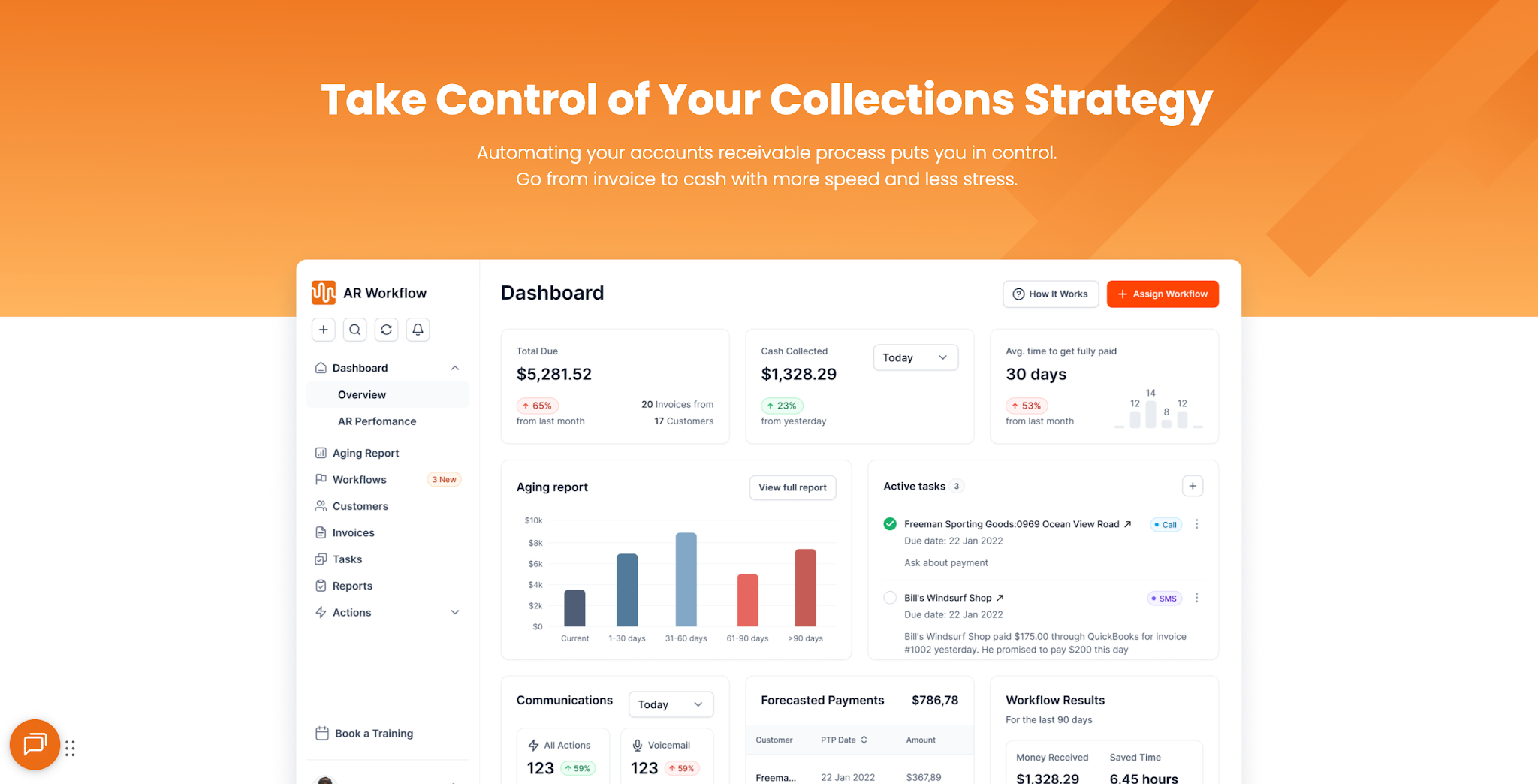
Collection workflows and reminders keep difficult accounts from going quiet.
Customers can use the platform's online payment options to settle their invoices, making the customer experience more convenient when they're ready to pay.
With these activities organized in a structured process, your employees can spend less time managing routine reminders and give more attention to accounts that require personal communication.

See which accounts still need attention at a glance.
Knowing how to handle customers who won't pay gives your business a starting point for recovering overdue payments. Maintaining that process consistently helps prevent outstanding accounts from going without attention.
However, keeping up with reminders and collection activity can become time-consuming when your team handles a growing number of invoices.
AR Workflow helps disaster restoration companies manage that workload by automating routine follow-ups and making outstanding payments easier to monitor.
Your team can spend less time manually chasing overdue invoices while maintaining a clearer picture of which accounts still need attention so your business' cash flow doesn't suffer over time.
Ask exactly which charge or term they disagree with, and answer it with your contract, photos and job records. If they still refuse, send a formal demand letter with a firm deadline. After that, weigh a collection agency, small claims court or a mechanic's lien where your state allows it. Our unpaid invoices guide walks through each stage.
The 7-7-7 rule comes from the Consumer Financial Protection Bureau's Regulation F, which implements the Fair Debt Collection Practices Act. It generally presumes that a covered debt collector violates federal law if they call more than seven times within seven days about a particular debt or call within seven days after speaking with the person about it.
This rule primarily applies to third-party collectors pursuing consumer debts. Businesses collecting their own invoices generally fall outside its scope, although other collection laws may apply.
Start by reviewing the invoice and payment agreement, then contact the client to understand why they haven't paid. If they continue ignoring your requests, send a formal demand letter and consider a collection agency or legal action when appropriate.
Keep records of your collection attempts to support any further action.
Send a payment reminder that clearly states the outstanding amount and due date. Follow up regularly if the customer doesn't respond, and consider a payment plan if they can't settle the full balance immediately.
If those efforts fail, evaluate your formal collection options, starting with a written demand.
Usually only if your signed contract or work authorization says so, and only within the limits your state allows. Many states cap interest rates and set rules for late fees. Check your agreement and state law before adding any charge to an overdue invoice.
Review past-due invoices to identify outstanding balances and missed payment deadlines. Contact customers promptly, record their responses, and schedule further reminders when necessary.
Escalate accounts that remain unpaid despite repeated collection attempts, following the same debt collection process every time so nothing is skipped.
Related reading
Your invoice, not a feature tour.
Bring one overdue invoice to a demo and see what AR Workflow would send, when, and how your customer would pay.
Sam owned and ran three restoration companies for more than 14 years and collected over $100 million in receivables. He built AR Workflow in 2020 to give contractors the collections system he wished he'd had.

AI writes the emails, sends the texts, and leaves the voicemails. Your team handles the conversations that matter, and your cash keeps moving.
 Keep QuickBooksStart with one invoiceStay in control

 Log in