Accounts receivable management for restoration contractors: a 7-step process, the KPIs to track, a follow-up schedule and credit policy you can copy today.


Take a moment and ask yourself this: how well are you managing the money that is owed to your restoration business? I mean really managing it. Good accounts receivable management is the difference between waiting on cash and controlling it, and proactive receivables management is how you get there.
If you are like most restoration business owners, you are probably doing the bare minimum: sending out invoices, waiting for payments, and chasing late payments once they slip too far past due.
Here is a hard truth we have learned from decades of consulting clients: reactive receivables management is holding your business back. It keeps you from the cash flow stability, financial freedom and growth potential your restoration business deserves. If you are in reactive mode, you are not alone, and you can change it starting now.
KEY TAKEAWAYS

Proactive receivables management begins with taking control. Anticipate problems before they happen, put smart systems in place that prevent cash flow crises, and build a business system that gets you paid on time while improving your financial health, strengthening customer relationships and positioning you to grow.
Below we cover the mindset, the strategies and the systems that change how you handle accounts receivable management: the benefits of a proactive approach, the practices to adopt, and how to build a system that keeps your offensive game strong.
Accounts receivable management is everything you do between finishing a job and having the money in the bank: setting terms, checking credit, sending accurate invoices on time, following up, taking payments, recording them and reviewing what is still open. Receivables management is the same idea in shorter words.
Most restoration companies only do the middle part. They invoice and then chase. The proactive version adds the steps on either side: agreeing on who pays what before work starts, and watching the numbers closely enough to act before a balance goes bad. On insurance work this matters even more, because one job can have three payers: the carrier, the homeowner's deductible and sometimes a mortgage company on the check.
| Reactive | Proactive | |
|---|---|---|
| Terms | Explained when the invoice is late | Signed before work starts, including who pays the deductible |
| Invoicing | Sent when someone has time | Sent the day the job or milestone is complete |
| Follow-up | Starts after the balance is overdue | Starts before the due date on a set schedule |
| Reporting | Aging report pulled at month end, if at all | Aging and DSO reviewed weekly |
| Escalation | Ad hoc and emotional | Defined steps and dates everyone knows |
Let me tell you something: waiting for problems to arise and then reacting to them is a weak business strategy.
When you are proactive, you are in control. Stop waiting for cash flow gaps, late payments or disputes to throw a wrench into your operation. Anticipate potential problems and build a system that prevents them before they appear. Here are the five baseline benefits of doing just that.
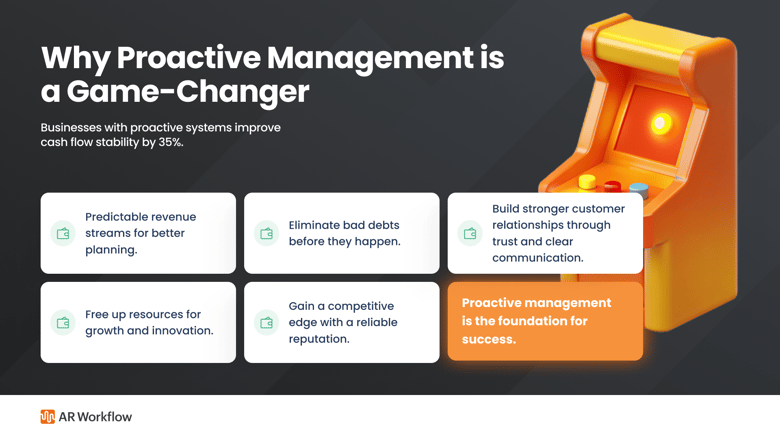
| 1 | Cash flow stability |
| 2 | Bad debt elimination |
| 3 | Stronger customer relationships |
| 4 | More efficient resource use |
| 5 | A real competitive edge |
Cash flow is the lifeblood of your business. Without it, you cannot pay your team, keep up with suppliers or invest in growth opportunities, and your business dies on the vine. When you are proactive, the resulting positive cash flow gives you the stability and liquidity to keep growing.
Revenue streams become predictable, which reduces financial stress. You plan better, budget more accurately, and enjoy the peace of mind that comes from knowing your cash flow is stable. For more on cash flow management for contractors, see simple payment strategies to boost your cash flow.
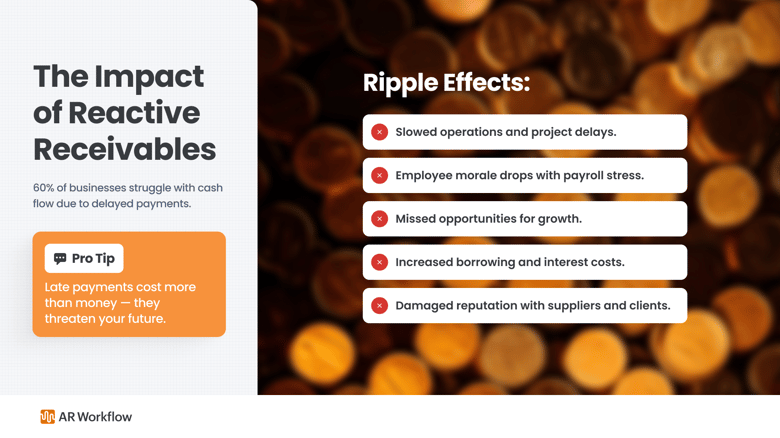
Along with cash flow stability, being proactive lets you stop bad debt before it happens. It is unpleasant to acknowledge, but every late payment is a potential bad debt. When you are playing catch-up, you are always on the back foot, scrambling to recover money that is increasingly unlikely to be paid. With proactive management, you stay ahead of that threat.
You want more than customers. You want long-term partnerships. The stronger your relationship, the more likely your client is to respect you and pay you on time, if not early.
One of the best ways to build strong customer relationships is clear communication and proactive receivables management, which in turn strengthen the relationship further. (See how this becomes a self-perpetuating cycle?) Customers want to feel that you have everything under control and that your payment processes are fair and consistent.
With proactive management, you set the tone and terms of the relationship. You build stronger customer relationships and a company culture that supports responsibility, responsiveness and growth, which leads to faster payments and makes it easier to stay proactive in every part of your work.
Imagine how much more effective your team could be if they were not constantly chasing late payments. Proactive receivables management frees up time so your team can focus on what really matters: growing the business, delivering great customer service and driving revenue.
Proactive management saves you money as well as time. Late payments cost you, whether through fees for a collection agency, the cost of legal disputes, or interest on loans you took out to cover a cash flow gap. When payments come late, they always cost more than they should. Proactive management cuts those costs and keeps more capital in your business.
The compounded benefit of all of the above is a true competitive edge. A strong, proactive receivables system signals that your business is solid, dependable and ready to grow.
Your reputation for reliability grows. Customers, suppliers and investors are drawn to you. When your receivables are in order, people trust you, and that leads to better deals, stronger partnerships and more opportunities.
Then you can focus on strategy. Instead of stressing about cash flow, you can explore options to scale, invest in new opportunities, expand into new markets and grow with confidence. Proactive receivables management is the foundation for long-term, sustainable growth.
Success in business comes down to a brutal truth: the people who are prepared are the ones who win. In receivables management, the winners spot potential issues before they become real problems. Here are four strategies to get there.
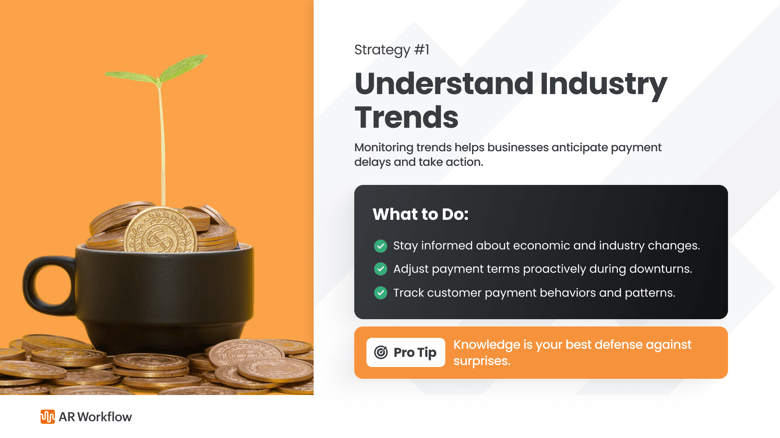
You cannot run your restoration business in a vacuum. What is going on in your industry? Are payments slowing down across the board? Are there external factors, like an economic downturn, that could affect your customers' ability to pay on time? Stay sharp. Staying ahead of industry trends lets you build strategy and take preemptive action.
Let customers know up front what your payment expectations are. Make it clear, and make it easy for them to pay you. When there is no confusion, there is less friction, and that means fewer disputes down the line. Clear payment terms are the place to start.

The first step in proactive management is having clear, comprehensive credit policies. Know who you are doing business with and set terms accordingly. A few practices to put in place from the start:
TEMPLATE
A one-page credit and payment policy for restoration jobs

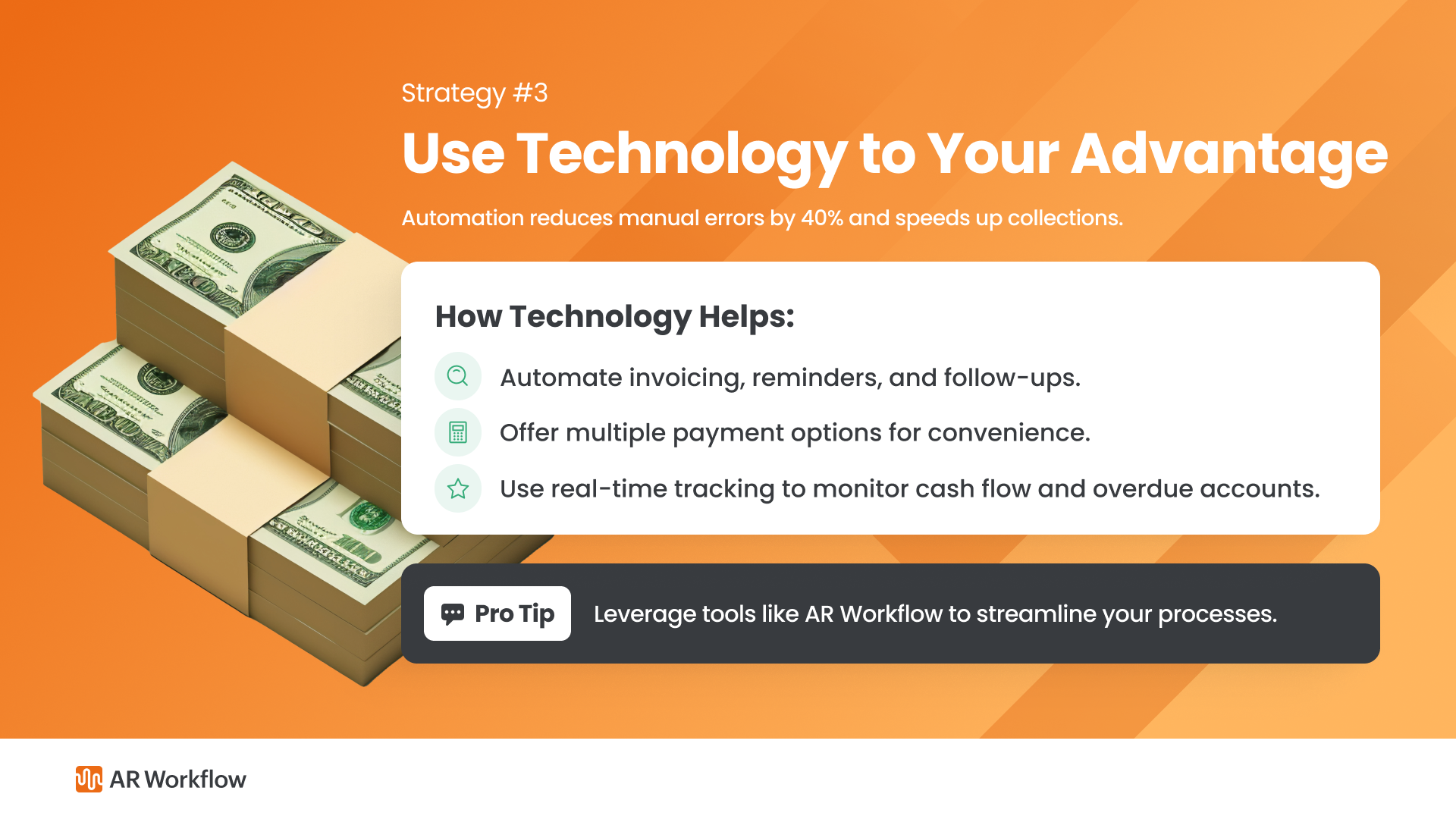
In today's digital world, there is no reason to manage receivables manually. Technology takes the guesswork out of the process and keeps cash flow strong. With automation, staying proactive and consistent in communication takes less of your time, and the whole relationship stays front of mind. (More on this in a second.) When you are proactive, your customers can be too.
Bring one overdue invoice.
We'll show you how a proactive follow-up system would handle it.
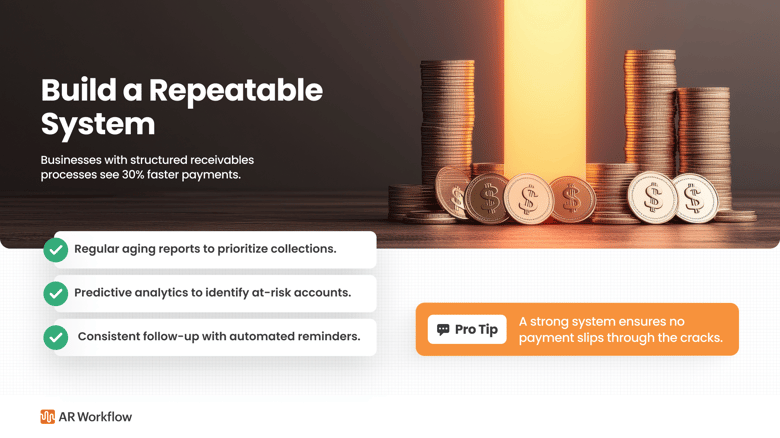
Let me be blunt: if you do not have a codified system for handling receivables, you are setting yourself up for failure. Proactive management is about building processes that work over and over, no matter who the client is and no matter how big or small the project. You need a structure that makes sure you always get paid. Our guide to building a restoration collections process lays out one in five steps.
The two keys to a repeatable, functioning proactive receivables system are analytics and automation.
Data is the most powerful tool you have for proactive receivables management. Use it well and you can predict payment problems before they arise. The data tells you what you need to know and gives you the insight to adjust. Pay attention to:
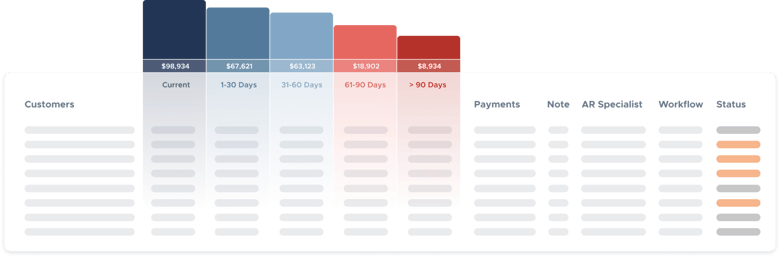
An aging report shows which balances need attention first.
Automate routine tasks like invoicing, follow-ups and payment tracking so your team spends less time on admin and more time doing what they do best. Places to start:
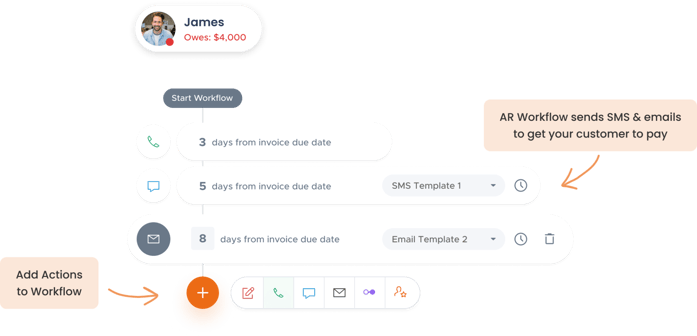
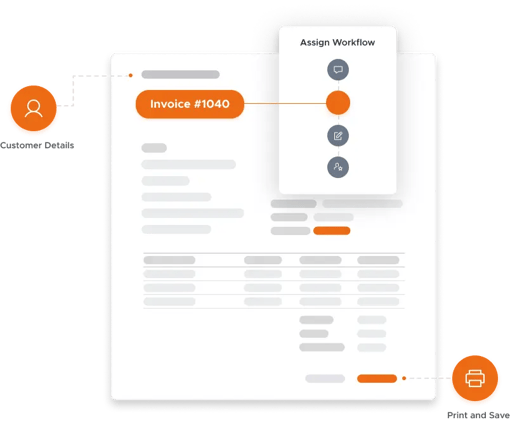
Collection workflows schedule each reminder automatically.
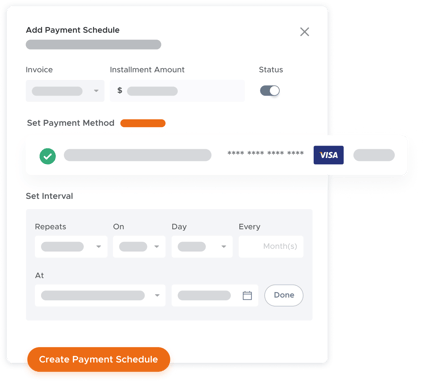

A proactive system is a set of steps that happen the same way on every job. Here is a simple seven-step accounts receivable management process you can adapt.
You do not need a finance team to manage receivables by the numbers. These five metrics cover most of what a restoration owner needs. AR reporting software can calculate them for you, or you can start in a spreadsheet.
| Metric | How to calculate it | Why it matters |
|---|---|---|
| Days sales outstanding (DSO) | Accounts receivable divided by credit sales for the period, multiplied by the days in the period | How long, on average, it takes to turn an invoice into cash |
| Percent over 60 days | Balances more than 60 days past due divided by total receivables | Shows how much of your AR is drifting toward bad debt |
| Collection effectiveness index (CEI) | Amount collected in the period divided by the amount that was collectible, as a percentage | Measures how well your follow-up is working, not just how much you billed |
| Average days delinquent | DSO minus your best possible DSO (what DSO would be if everyone paid on terms) | Separates slow terms from slow payers |
| Invoice lag | Days from job completion to invoice sent | Every day of lag adds a day to your cash cycle |
Example (hypothetical numbers): If you have $180,000 in open receivables and billed $270,000 over the last 90 days, your DSO is $180,000 divided by $270,000, times 90, which equals 60 days. If your standard terms are 30 days, roughly half of that time is delay you can work on.
Insurance jobs need two tracks: one for the people who owe you directly and one for the claim. Keep them separate.
| When | Who | Message |
|---|---|---|
| At signing | Homeowner | Payment policy, deductible amount and how to pay |
| Invoice day | Homeowner or customer | Invoice with a payment link for their portion |
| Invoice day | Adjuster | Final estimate, photos and completion docs, plus a request for claim status (no payment link) |
| 3 days before due | Homeowner or customer | Friendly reminder by email or text |
| Due date | Homeowner or customer | Due today reminder with the payment link |
| 7 days past due | Homeowner or customer | Firm reminder and an offer to talk through a payment plan |
| Every 7 to 10 days | Adjuster | Status check and an offer of any missing documentation |
| 30 days past due | Homeowner or customer | Phone call, then a written past due notice |
| 45 to 60 days past due | Owner or office manager | Final notice and a decision on collections or lien rights (rules vary by state) |
Tip: Never send a payment link to an adjuster or carrier. Payment links go to the homeowner for their portion, and adjuster follow-up stays on claim status and documentation.

You do not have to do this alone. Tools exist to help you take control of your receivables, and AR Workflow is built to make proactive management seamless, efficient and scalable for our industry.
Standardize and automate your communications to save time, look more professional, and keep all your communication in one platform. Emails and texts go out on schedule, with texts sent from a dedicated number.
If you run on QuickBooks Online, see our QuickBooks accounts receivable automation guide.


Accounts receivable management is the process of making sure the money customers owe you is billed correctly, followed up on and collected on time. It covers terms, credit checks, invoicing, reminders, payment processing, recording payments and reviewing aging reports.
It means managing what customers owe before it becomes a problem: clear terms and credit policies up front, regular review of aging reports and payment patterns, reminders before the due date, and easy ways to pay, instead of waiting for invoices to go late and then chasing them.
Send invoices promptly, state payment expectations up front, offer card and ACH payment, follow up consistently before and after the due date, and review your aging report regularly to catch at-risk accounts early. Our guide on how to improve your collections process has more.
Look at which balances are moving into older buckets, which customers are paying more slowly than before, and which large balances need a personal follow-up. Prioritize the most overdue accounts first.
Set terms before work starts, check credit where it matters, invoice promptly, make paying easy, follow up on a schedule, record payments right away and review your numbers weekly. The order matters: problems you prevent in the first two steps never reach collections.
The most useful are days sales outstanding (DSO), the percent of receivables over 60 days, the collection effectiveness index and invoice lag. Review them weekly and look for trends rather than single bad weeks.
Here is the truth: proactive receivables management is not a nice-to-have. It is an essential game-changer that primes your business for growth, success and financial freedom.
Take control of your receivables: set terms before the job, invoice the same day, follow up on a schedule and review your numbers every week. Insurance carriers and mortgage companies may shape when some payments arrive, but strong accounts receivable management puts the rest of the timeline back in your hands.
You have the tools. You have the knowledge. Now it is time to take action.
Related reading
Your invoice, not a feature tour.
Bring one overdue invoice to a demo and see what AR Workflow would send, when, and how your customer would pay.
Sam owned and ran three restoration companies for more than 14 years and collected over $100 million in receivables. He built AR Workflow in 2020 to give contractors the collections system he wished he'd had.

AI writes the emails, sends the texts, and leaves the voicemails. Your team handles the conversations that matter, and your cash keeps moving.
 Keep QuickBooksStart with one invoiceStay in control

 Log in