Restoration companies invest considerable time and resources into every job they take on. While completing the work is the immediate priority, the business still needs to recover the costs of that work and collect the revenue it has earned.
The invoice plays an important role in that process. This is especially true for mold remediation, where the final charges may depend on the extent of contamination, the services performed, and the equipment required.
To help you better understand a mold remediation invoice, this blog covers everything you need to know.
TL;DR
- A mold remediation invoice should identify the completed work and clearly explain the charges for each billable service.
- Mold remediation billing may involve separate charges for containment, material removal, labor, and equipment usage.
- Contractors can use an invoice example and customizable template to organize job information and calculate the final balance.
- Accurate job records and clear payment instructions help reduce avoidable questions during invoice review.
- AR Workflow helps restoration companies track outstanding payments and automate routine collection reminders.
What Makes Mold Remediation Invoicing Different?
Mold remediation, also called mold abatement in some contexts, involves removing mold contamination from a property and addressing affected materials to help restore the space to an appropriate condition.
Depending on the extent of the mold growth, the work may involve setting up containment barriers and maintaining negative air pressure to help prevent contamination from spreading into areas used by occupants.
Crews may also use HEPA filtration equipment to filter airborne particles like spores, remove contaminated drywall, and clean affected surfaces.
These activities require specialized expertise and affect how contractors prepare the final invoice.
Unlike a straightforward repair job where the contractor can bill for a defined replacement or installation, mold remediation may involve several separate services.
The amount of work can also change once the crew investigates areas that weren't fully accessible during the initial inspection.
For example, a contractor may initially plan to remove mold from one section of drywall. After opening the wall, the crew may discover additional contamination that requires more removal work, subject to the customer's approval.
That's why the invoice needs to account for those changes while clearly distinguishing the services the crew completed.
Equipment usage also requires attention. If the team operates HEPA air scrubbers or dehumidifiers over several days, the invoice should reflect the applicable equipment charges and billing duration.
These details help explain the final amount to the customer or insurance reviewer. They also give the contractor a clear basis for checking the charges against the completed job records.
What Should a Mold Remediation Invoice Include?
After remediation is complete, your team now needs to turn those job records into a bill that your customer or other responsible payer can review. These are some of the things you need to make sure are included.
Business and Customer Information
Every mold remediation invoice should identify the restoration company that performed the work and the customer responsible for paying for it.
This includes your company's business name, website, and contact information, as well as the customer's name and billing address. These details establish who issued the invoice and who should receive it.
However, the customer's billing address may differ from the residential or commercial property where your crew performed the mold remediation work. This often happens when your company works on rental properties or when a property management company handles the billing.
For that reason, the invoice should also include the job site address so the recipient can identify the property associated with the charges.
Together, these details help ensure that the invoice reaches the right person and that they can contact your company if they have questions about the bill.
Invoice and Job Details
Beyond identifying the customer and property, the invoice needs information that distinguishes it from other bills your company issues.
This includes a unique invoice number, invoice date, and job reference number if your company uses one. The invoice should also indicate when your crew performed the work.
These details matter most when your company handles several jobs for the same customer or bills different stages of a restoration project separately.
For example, a property may require mold remediation before the contractor can begin reconstruction. If your company bills these services separately, the job details help the customer identify which portion of the project the invoice covers.
They also give your accounting team a specific reference when recording payments or reviewing the invoice later.
Insurance and Claim Information
Since mold remediation sometimes follows water damage or another property damage incident, the customer may have an insurance claim associated with the work.
When insurance plays a role in the billing process, the invoice should include the insurance carrier's name and claim number. It may also need the adjuster's contact information, depending on the insurer's submission requirements.
These details allow the insurance reviewer to identify the claim and connect the invoice to the work the contractor completed.
However, it's important to understand that insurance coverage for mold remediation depends on the customer's policy and what caused the mold growth.
For example, a policy may cover remediation related to certain covered water-damage incidents, such as a sudden pipe leak, while excluding mold that developed because of long-term moisture problems.
This distinction affects which charges the insurer may pay and which expenses remain the customer's responsibility.
Including the correct claim information helps the insurer review the bill, while confirming payment responsibility helps your company direct the invoice to the appropriate payer.
Itemized Mold Remediation Services
Once the invoice identifies the job, it also needs to explain the specific work your company completed.
This is particularly important for mold remediation because the services required can vary depending on how far the contamination has spread and which materials it has affected.
For example, a project involving mold on a small section of drywall may require less work than one where contamination has spread into several rooms.
Because these projects require different levels of work, the invoice should break down the services into individual line items.
Common mold remediation services that may appear on an invoice include:
- Containment setup and removal
- Mold-contaminated material removal
- HEPA vacuuming and surface cleaning
- Air filtration and air quality testing
Each line item should identify the service and its corresponding charge. When the contractor bills according to quantity, the invoice should also include the applicable measurement and rate.
For example, if your company charges for contaminated drywall removal by square footage, the invoice should show how much drywall the crew removed and the agreed rate per square foot.
This breakdown helps the recipient understand which services contributed to the final amount and how your company calculated each charge.
Labor, Materials, and Equipment Costs
The services listed on a mold remediation invoice may also involve separate costs for the labor, materials, and equipment required to complete the work.
These costs help explain what went into performing each service, especially when the contractor's pricing agreement calls for separate charges.
For example, labor costs may depend on how many hours the crew spent performing the remediation work. If your company charges by the hour, the invoice should reflect the billable hours and applicable rate.
Materials involve the supplies your team used during the project, such as containment materials, replacement HEPA filters, or other consumables that the work required.
Equipment costs work somewhat differently because the charges may depend on how long the crew used the equipment.
For instance, if your team operated two HEPA air scrubbers for three billable days, the equipment charge would reflect the number of units, the duration, and the agreed rate.
Depending on your company's pricing arrangement, these costs may appear separately or form part of the service charges.
The important thing is that the invoice reflects the agreed pricing structure and provides enough detail to explain the final amount.
Additional Charges and Supporting Documentation
Beyond the main remediation services, a mold remediation project may involve additional expenses that the contractor needs to account for.
For example, removing contaminated materials from a property may require special handling or disposal. If your company's agreement allows a separate disposal charge, that expense should appear on the invoice with a clear description.
However, identifying the charges is only part of explaining the final bill. The recipient may also need remediation documentation, such as testing reports that support the work and expenses.
This is important when an insurance company reviews the invoice as part of a property damage claim.
For example, photographs can help document the affected areas and the remediation work. Equipment logs can also support charges that depend on how long your crew operated air filtration equipment.
If your team discovered additional contamination during the project, approved changes to the scope of work can help explain why the final charges differ from the original estimate.
These records give the recipient a way to verify the work behind the invoice. The specific documents your company needs to provide will depend on the project and the recipient's requirements.
Payments and Final Balance
After accounting for the completed services and any additional charges, the invoice should show how much the customer owes.
This section brings the individual charges together into a subtotal before accounting for applicable taxes, adjustments, and payments the customer has already made.
Previous payments are particularly important because the customer may have paid a deposit before your crew began the remediation work.
For example, suppose the completed mold remediation job costs $5,000. If the customer already paid a $1,000 deposit, the invoice should show that payment and the remaining $4,000 balance.
Showing this calculation helps the customer understand how your company arrived at the amount due. It also gives your accounting team an accurate outstanding balance to track once the invoice goes out.
Payment Terms and Instructions
Once the invoice establishes the amount the customer owes, it also needs to explain when and how they should pay it.
Payment terms set out the customer's payment obligations according to the agreement they have with your company.
For example, your company may require payment within 15 or 30 days after issuing the invoice. If that's the agreed arrangement, the invoice should clearly state the corresponding due date.
The agreement may also include late-payment fees or other conditions that apply when the customer misses the deadline.
Alongside those terms, the invoice should explain which payment methods your company accepts and how the customer can complete the payment.
If your company offers online payments, for example, the invoice can include the relevant payment link or instructions. The same applies to bank transfers or other accepted methods.
With the payment terms and instructions clearly stated, the customer knows how much they owe, when payment is due, and how to settle the balance.
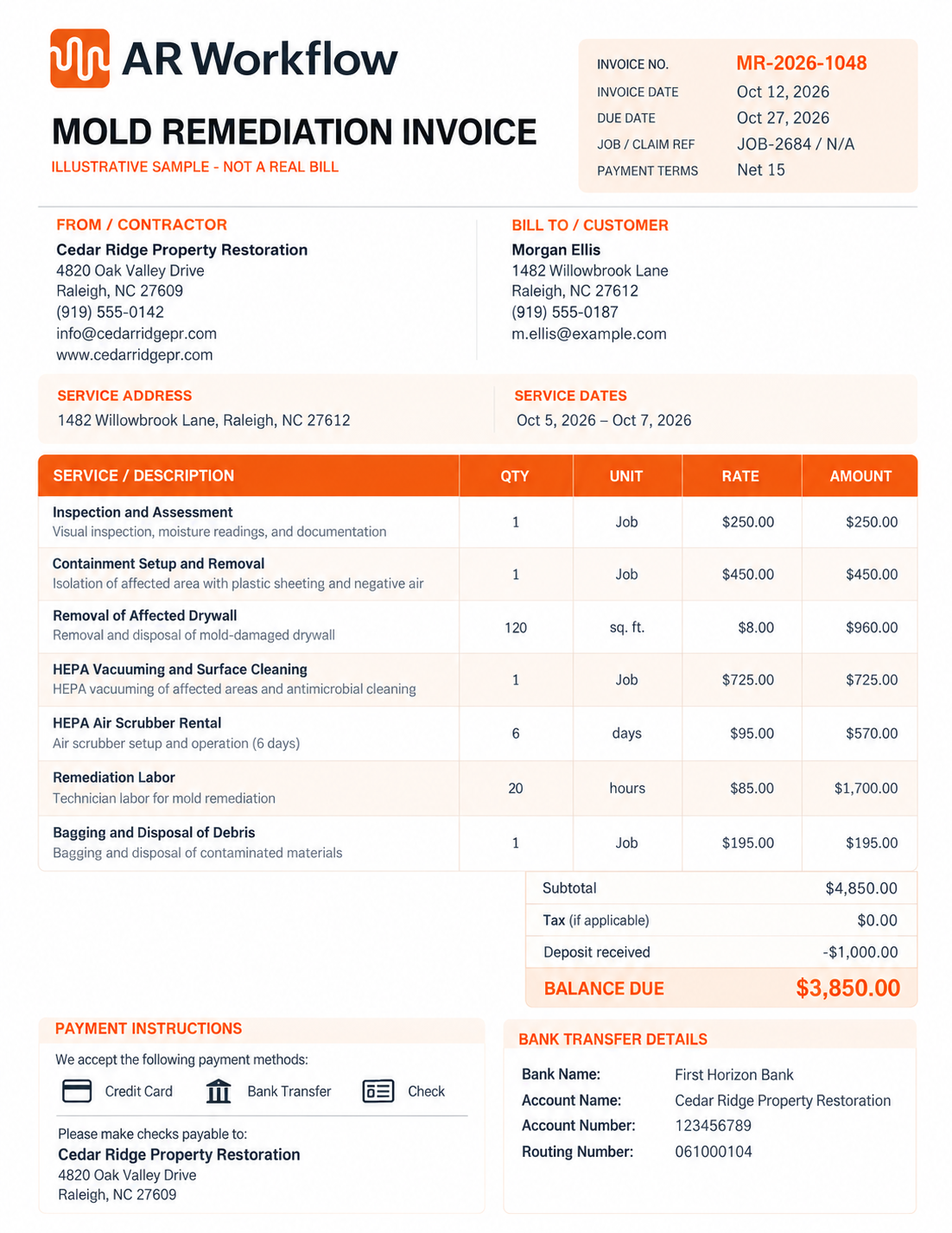
Mold Remediation Invoice Example
Here's an example of a mold remediation invoice.
How to Create a Mold Remediation Invoice
Now that we've covered the invoice components and an example of how they appear together, let's help you create your first one.
Step 1. Review the Completed Work
Begin with the final scope of work and the records your crew maintained during the project.
Compare the original estimate with the work the team actually completed. Mold remediation jobs can change after crews gain access to affected areas, so the initial estimate may not reflect every service the customer ultimately authorized.
For example, the crew may have removed more contaminated drywall than the original assessment anticipated.
If that happened, check the revised scope and relevant approval before including the additional work.
Also review equipment logs and labor records. These will help you identify the quantities and durations that belong on the final invoice.
Step 2. Gather the Necessary Invoice Details
Once you've confirmed the completed work, collect the information that identifies the customer and the job.
Start with the billing contact and property address. Then gather the invoice number, service dates, and any job reference your company uses.
If the customer has an insurance claim, confirm the claim details and any specific submission instructions.
You'll also need the agreed pricing information for the work. Check the estimate, work authorization, or other applicable agreement for the rates your company should use.
Gathering these details before entering charges helps your team prepare the invoice without repeatedly returning to the job file.
Step 3. Itemize the Services and Charges
With the job information ready, you can begin entering the completed services to generate the invoice. Start with one service and record its description, then add the applicable quantity and rate.
For example, if your crew removed 120 square feet of contaminated drywall, enter that quantity along with the agreed price per square foot. Follow the same process for the other billable services.
Equipment charges may require a different unit. If the crew operated two air scrubbers for three billable days, calculate the charge using the equipment quantity, duration, and agreed rate. Continue until the invoice accounts for the completed work.
Before moving on, compare the line items with your job records to make sure you haven't overlooked a charge or included work that doesn't belong on the invoice.
Step 4. Calculate the Final Amount Due
After entering the individual charges, add them to calculate the subtotal.
Next, apply any taxes or adjustments that the billing agreement and applicable legal regulations call for, then check whether the customer has already made a payment toward the job.
For example, if the total charges amount to $5,000 and the customer paid a $1,000 deposit, deduct that deposit to arrive at the $4,000 balance.
Review the calculations against your accounting records for accuracy. This final check helps your team catch errors before the customer receives the invoice.
Step 5. Review and Send the Invoice
Finally, before sending the restoration invoice, review it as though you were the person responsible for approving payment.
Can the recipient identify the property and completed work? Do the quantities explain how your company calculated the charges?
Check that the invoice includes the essential payment details, including the correct balance and payment instructions.
If the recipient requires supporting documentation, like clearance tests, attach the relevant job records or provide them through the agreed submission process.
Then send the invoice to the appropriate contact and save the date your company issued it so you'll have a starting point for monitoring the payment.
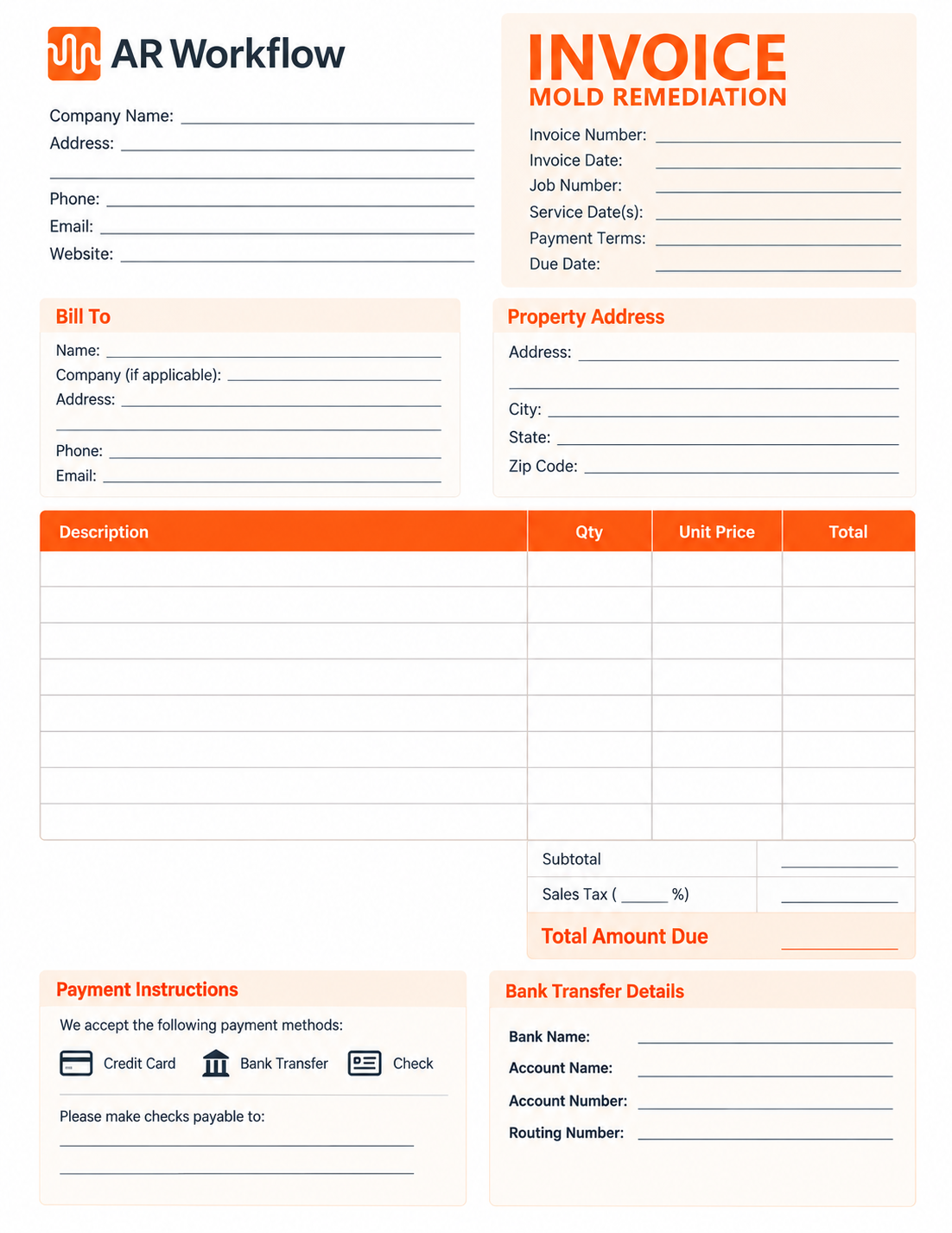
Free Downloadable Mold Remediation Invoice Template
To make invoice preparation easier, download this free mold remediation template to keep your team's invoices consistent. Customize it to fit your company's needs and fill in the details for each mold remediation job.
You can also check out our other restoration invoice templates here for more options.
How to Avoid Payment Delays on Mold Remediation Invoices
Preparing an accurate mold remediation invoice helps prevent billing questions that could delay payment. However, once your team sends the invoice, you still need to make sure the customer pays within the agreed terms.
This takes more than tracking due dates. Your team needs to know which invoices remain unpaid and when to contact clients about their outstanding balances.
Without a defined collections process or the right tools, these responsibilities can quickly become manual, with your staff spending extra hours checking payment statuses while managing multiple restoration jobs at once.
The longer those invoices remain unpaid, the longer your company has to cover operating expenses without receiving the money it has already earned.
That is why a consistent collections process matters. It helps your team follow up regularly and address overdue invoices before they create further cash flow pressure.
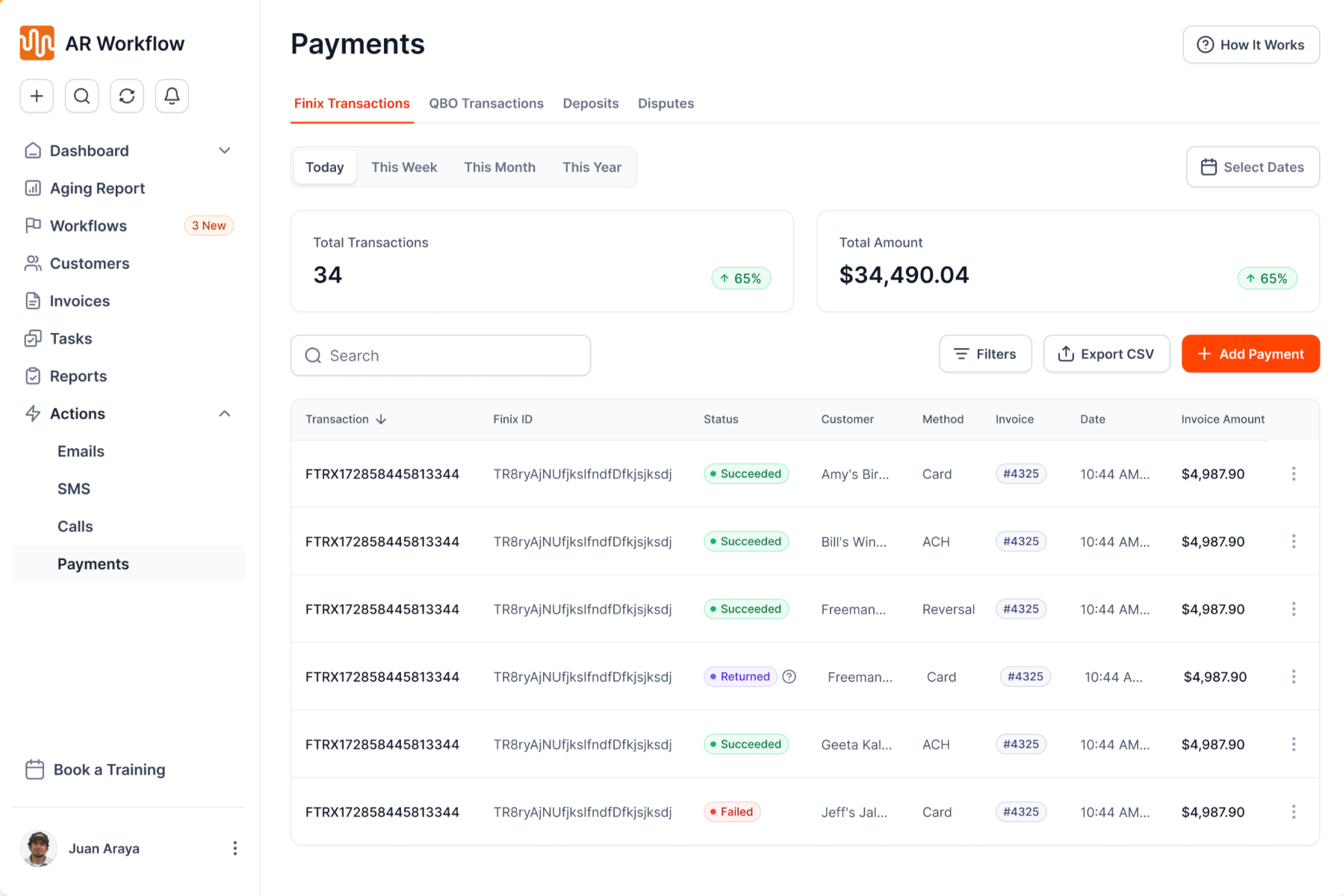
AR Workflow helps restoration companies automate that process, from email and SMS payment reminders to convenient online payment options.

It also gives your team a clear view of outstanding invoices and their payment statuses, making it easier to identify which accounts still need attention. This way, your staff can spend less time on the collections process and more time moving your mold remediation business forward.
Keep Payments on Track With AR Workflow

Preparing a mold remediation invoice is only one part of getting paid for the work your company completes. Even if your team accounts for every service and charge correctly, that effort means little to your cash flow if the invoice remains unpaid.
So, while it's important to get the invoice right, your company also needs a process that makes sure those outstanding payments don't go unnoticed or without regular follow-ups.
AR Workflow's automation software helps restoration companies do this by automating payment reminders and giving teams better visibility into unpaid invoices.
With less manual work involved in collections, your staff can focus on running the business while maintaining a more consistent approach to collecting payments.
Your company has already invested the time and resources to complete the mold remediation work. Your next priority is collecting the revenue you've earned so you can reinvest it in the business.
FAQs About Mold Remediation Invoice
Can I deduct mold remediation costs on my taxes?
Mold remediation costs may be tax-deductible for rental or business properties if they qualify as repairs. However, costs that count as property improvements may need to be capitalized.
If you pay for mold remediation in a home you personally live in, you generally cannot claim that expense as a tax deduction.
How much does mold remediation usually cost?
Mold remediation typically costs between $1,500 and $9,000, although larger or more severe projects can cost significantly more. The final price depends on the size of the affected area, the extent of contamination, and the work required.
How do people pay for mold remediation?
Customers typically pay for mold remediation through cash, credit cards, checks, or bank transfers, depending on what the contractor accepts. Homeowners insurance may also cover some costs if the mold resulted from a covered incident.
Who pays for mold remediation, buyer or seller?
The buyer or seller may pay for mold remediation, depending on what they negotiate during the property sale. Sellers may agree to complete the remediation before closing, while buyers may accept responsibility in exchange for a lower purchase price.