California mechanics lien laws in plain English: deadlines for primes, subs and suppliers, notice rules, home rules and how to file. Free deadline calculator.

California mechanics lien law gives contractors, subcontractors and suppliers a way to get paid when a customer won't pay for work on a property. But a lien only works if you send the right notices and file on time. Miss one step and you can lose the lien. This guide explains the California mechanics lien deadlines in plain English, with the law behind each rule.

Quick answer: California mechanics lien deadlines
Direct contractor: 90 days after completion of the whole work of improvement, or 60 days after a recorded notice of completion/cessation. Others: 90 days after completion, or 30 days after recorded notice (§§ 8412, 8414).
Last updated: November 23, 2026
This is not legal advice. Rules differ by state and change over time. We checked each rule below against the text of the California statute (Cal. Civ. Code §§ 8400–8494; notices §§ 8180–8204) in November 2026. Read the current law or ask a California construction attorney before you file.
"Prime contractor" means you have a contract directly with the property owner. "Subcontractor" or "supplier" means you were hired by the prime contractor or by another sub. These rules are for private projects. Public projects use bond claims instead of liens.
| Rule | What California requires | Law |
|---|---|---|
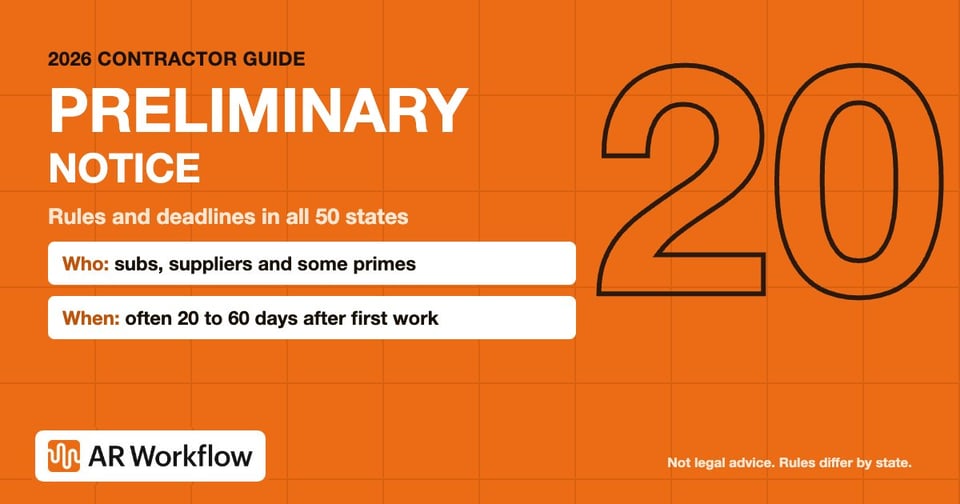
| Preliminary notice: prime contractor | Conditional. A claimant with a direct contract with the owner must give preliminary notice only to the construction lender (or reputed lender), if there is one. No notice to the owner. If there is no construction lender, no notice is needed. Deadline: 20 days after first furnishing (§ 8204), with the same 20-day lookback if late. | Cal. Civ. Code § 8200(e)(2); § 8204(a) |
| Preliminary notice: subcontractor | Required before a lien, stop payment notice or payment bond claim. Give it to the owner, the direct contractor and the construction lender (if any) no later than 20 days after first furnishing work. A late notice is allowed, but the lien then covers only work furnished within 20 days before the notice was served, plus all work after. Compliance is a 'necessary prerequisite to the validity of a lien claim'. | Cal. Civ. Code §§ 8200(a),(c); 8204(a) |
| Preliminary notice: supplier | Same as subs: suppliers and equipment lessors give the 20-day notice to owner, direct contractor and lender. Laborers are exempt (§ 8200(e)(1)). | Cal. Civ. Code §§ 8200(a),(e)(1); 8204 |
| Notice of intent to lien | No pre-lien notice of intent. The claim of lien itself must include the statutory 'NOTICE OF MECHANICS LIEN' (at least 10-point bold, last sentence in caps) and be served on the owner (see owner_service). | Cal. Civ. Code § 8416(a)(8) |
| Lien filing deadline: prime contractor | Record only after the direct contract is complete, and before the EARLIER of (a) 90 days after completion of the whole work of improvement, or (b) 60 days after the owner records a notice of completion or cessation. (b) applies only if the notice is valid: a notice of completion must be recorded within 15 days after completion (§ 8182), and the owner must send the direct contractor a copy within 10 days of recording (§ 8190). | Cal. Civ. Code §§ 8412, 8180, 8182, 8190 |
| Lien filing deadline: subcontractor and supplier | Record only after the claimant stops providing work, and before the EARLIER of 90 days after completion of the work of improvement or 30 days after the owner records a valid notice of completion or cessation. | Cal. Civ. Code § 8414 |
| Residential projects | Same deadlines as commercial. Trap: an owner who lives in the property, where the dwelling has 4 or fewer units, is not an 'owner' for the copy duty in § 8190. Their recorded notice of completion or cessation cuts the deadline to 60 or 30 days even if no copy is sent. | Cal. Civ. Code §§ 8412, 8414, 8190(d) |
| Notice of completion: does it shorten the deadline? | Completion (§ 8180) occurs on the first of: (1) actual completion; (2) occupation or use by the owner plus cessation of labor; (3) continuous cessation of labor for 60 days; (4) recording of a notice of cessation after 30 days of continuous cessation (§ 8188). A notice of completion is valid only if recorded on or within 15 days after completion, signed and verified by the owner (§ 8182). Within 10 days of recording a notice of completion or cessation, the owner must send a copy to the direct contractor and to each claimant who gave preliminary notice. Otherwise the notice 'is ineffective to shorten the time' for that person (§ 8190(a),(c)). Exempt owners, for whom shortening applies with no copy sent: owner-occupants of dwellings with 4 or fewer units, security-interest holders, and § 1102.2(b)-(d) transferees (§ 8190(d)). | Cal. Civ. Code §§ 8180, 8182, 8188, 8190 |
| Serving the owner after you file | Serve a copy of the claim of lien, with the Notice of Mechanics Lien, on the owner or reputed owner. Use registered or certified mail, or first-class mail with a certificate of mailing, postage prepaid. Send it to the owner's residence or place of business, the address on the building permit, or the § 8174 address. If the owner cannot be served that way, mail it to the construction lender or the original contractor. Service is complete on deposit in the mail. The signed proof-of-service affidavit is part of the claim, so serve no later than the recording date. Failure makes the lien 'unenforceable as a matter of law'. | Cal. Civ. Code § 8416(a)(7),(c),(d),(e) |
| Deadline to sue (enforce the lien) | File the foreclosure action within 90 days after the claim of lien is recorded, or the lien expires and is unenforceable. Exception: if claimant and owner agree to extend credit and record notice of the extension (within 90 days of recording, or later but before a good-faith purchaser or encumbrancer acquires rights), suit is due within 90 days after the credit expires, but 'in no case later than one year after completion of the work of improvement'. | Cal. Civ. Code § 8460(a),(b) |
Here is each deadline for prime contractors, subcontractors and suppliers on a commercial job. Homes have some different rules in California. See the home rules below. "Prime" means you have a contract with the owner. Some deadlines change if the owner records a notice, so check the full rules below.
| Step | Prime contractor | Subcontractor | Supplier |
|---|---|---|---|
| Preliminary notice | Only in some cases: Within 20 days after your first day of work or delivery. | Within 20 days after your first day of work or delivery. | Within 20 days after your first day of work or delivery. |
| Notice of intent to lien | Not required | Not required | Not required |
| File the lien | Within 90 days after the project is finished. | Within 90 days after the project is finished. | Within 90 days after the project is finished. |
| Serve a copy of the lien | Before the lien is recorded. | Before the lien is recorded. | Before the lien is recorded. |
| Sue to enforce the lien | Within 90 days after the lien is recorded. | Within 90 days after the lien is recorded. | Within 90 days after the lien is recorded. |
Get your exact California dates
Enter your first and last day of work. Our free calculator shows the last day to send each notice, file your lien and sue.
Roofing, restoration and remodeling work on homes often has extra rules. In California:
(1) § 8190(d): an owner-occupant of a dwelling with 4 or fewer units need not send notice-of-completion copies, so the 60/30-day cutoffs apply anyway. (2) B&P § 7159, the field not verified before and now statute-verified: any home improvement contract over $500 must be in writing and include the 'MECHANICS LIEN WARNING' (§ 7159(e)(4)). The down payment may not exceed $1,000 or 10% of the price, whichever is less. The contract must include a 3-business-day right to cancel (5 days for senior citizens, 7 days for repairs after a declared disaster). (3) B&P § 7031: an unlicensed contractor cannot sue for compensation, including lien foreclosure, and may have to disgorge payments. (4) Same lien deadlines as commercial.
Same deadlines as commercial. Trap: an owner who lives in the property, where the dwelling has 4 or fewer units, is not an 'owner' for the copy duty in § 8190. Their recorded notice of completion or cessation cuts the deadline to 60 or 30 days even if no copy is sent.
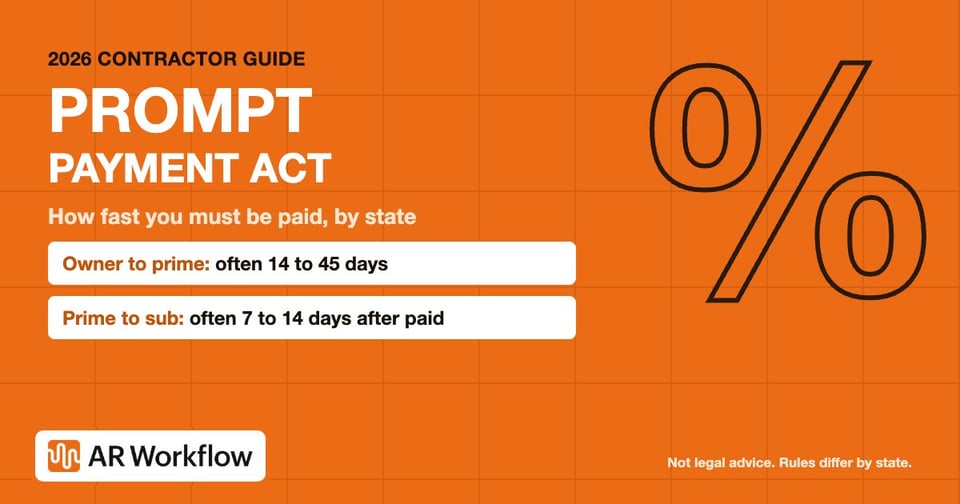
A prompt payment act sets how fast you must be paid. Before a lien, it is your first tool when a pay app is late. Here are the California rules.
| Rule | Private jobs | Public jobs |
|---|---|---|
| Owner pays the prime | 30 days after demand for pay | 30 days after good pay request |
| Prime pays the sub | 7 days after prime is paid | 7 days after prime is paid |
| Late interest | 2% per month | 2% per month; 10% per year for state |
Law: private: Cal. Bus. & Prof. Code 7108.5; Cal. Civ. Code 8800; public: Cal. Pub. Cont. Code 10261.5; 10262; 10853. Our plain-English summary of the ASA and Kegler Brown 2024 prompt pay chart. Check the statute before you rely on it.
See every state side by side in our prompt payment act rules by state.
A lien is a last resort. It costs time and money, and it can end the customer relationship. Most contractors get paid sooner with a clear follow-up plan:
Tools and related guides
Official law and forms: Many states print the lien form or notice wording right in the law. Read the California lien law and use the state form if it has one.
Prime contractors: Record only after the direct contract is complete, and before the EARLIER of (a) 90 days after completion of the whole work of improvement, or (b) 60 days after the owner records a notice of completion or cessation. (b) applies only if the notice is valid: a notice of completion must be recorded within 15 days after completion (§ 8182), and the owner must send the direct contractor a copy within 10 days of recording (§ 8190). Subcontractors and suppliers: Record only after the claimant stops providing work, and before the EARLIER of 90 days after completion of the work of improvement or 30 days after the owner records a valid notice of completion or cessation.
Send any required notices first, then record your lien claim before the deadline and serve the owner. Prime contractors: 90 days after completion of the project. Subcontractors and suppliers: 90 days after completion of the project. Then sue to enforce it on time, or release it once you are paid. The step-by-step section above walks through each part.
Required before a lien, stop payment notice or payment bond claim. Give it to the owner, the direct contractor and the construction lender (if any) no later than 20 days after first furnishing work. A late notice is allowed, but the lien then covers only work furnished within 20 days before the notice was served, plus all work after. Compliance is a 'necessary prerequisite to the validity of a lien claim'.
No pre-lien notice of intent. The claim of lien itself must include the statutory 'NOTICE OF MECHANICS LIEN' (at least 10-point bold, last sentence in caps) and be served on the owner (see owner_service).
(1) § 8190(d): an owner-occupant of a dwelling with 4 or fewer units need not send notice-of-completion copies, so the 60/30-day cutoffs apply anyway. (2) B&P § 7159, the field not verified before and now statute-verified: any home improvement contract over $500 must be in writing and include the 'MECHANICS LIEN WARNING' (§ 7159(e)(4)). The down payment may not exceed $1,000 or 10% of the price, whichever is less. The contract must include a 3-business-day right to cancel (5 days for senior citizens, 7 days for repairs after a declared disaster). (3) B&P § 7031: an unlicensed contractor cannot sue for compensation, including lien foreclosure, and may have to disgorge payments. (4) Same lien deadlines as commercial.
File the foreclosure action within 90 days after the claim of lien is recorded, or the lien expires and is unenforceable. Exception: if claimant and owner agree to extend credit and record notice of the extension (within 90 days of recording, or later but before a good-faith purchaser or encumbrancer acquires rights), suit is due within 90 days after the credit expires, but 'in no case later than one year after completion of the work of improvement'.
On private jobs: owner pays the prime: 30 days after demand for pay; prime pays the sub: 7 days after prime is paid. On public jobs: owner pays the prime: 30 days after good pay request; prime pays the sub: 7 days after prime is paid. Check the statute for exceptions.
See mechanics lien deadlines for all 50 states
Get paid before it gets to a lien.
AR Workflow works with QuickBooks and follows up on every invoice for you, from the first friendly reminder to the final notice. Bring one overdue invoice to a demo and see what we would send, and when.
Sam owned and ran three restoration companies for more than 14 years and collected over $100 million in receivables. He built AR Workflow in 2020 to give contractors the collections system he wished he'd had.

AI writes the emails, sends the texts, and leaves the voicemails. Your team handles the conversations that matter, and your cash keeps moving.
 Keep QuickBooksStart with one invoiceStay in control

 Log in